








Frequently Asked Questions
Answers to common questions about MPS Acoustics acoustic panels, ceiling baffles, clouds, room dividers, custom solutions, and Voice Arrest sound masking. Product ratings, materials, availability, and installation requirements vary by product and project; consult the applicable MPS documentation.
About MPS Acoustics
What is MPS Acoustics?
MPS Acoustics is a U.S. manufacturer of design-oriented acoustic panels, ceiling baffles, clouds, room dividers, integrated lighting, and sound masking systems. Based in Plano, Texas, MPS helps architects, designers, and facilities teams reduce echo and unwanted noise in commercial spaces with custom, sustainable felt acoustic solutions.
What types of acoustic products does MPS manufacture?
MPS manufactures acoustic wall panels, ceiling baffles, ceiling clouds, hanging room dividers, slatted and etched decorative panels, LED-integrated acoustic lighting, and Voice Arrest sound masking systems. Nearly every product is customizable in size, shape, and color, and MPS also builds fully custom solutions through its in-house design studio, The Lab.
What markets and industries does MPS serve?
MPS serves commercial interiors including corporate offices, healthcare, education, hospitality, restaurants, retail, government, and multi-family. Products are specified by architects, interior designers, general contractors, AV integrators, and facilities teams. Trusted by brands such as Google, Apple, Boeing, Gensler, and Pfizer for projects of every scale.
What makes MPS Acoustics different from other acoustic manufacturers?
MPS combines design-driven aesthetics, customization, and project support. Acoustic felt products use recycled PET content, and MPS provides design and specification assistance for product and project needs.
Where are MPS products manufactured?
MPS Acoustics'products are designed and manufactured in our Plano, TX facility. Domestic production shortens lead times, supports quality control, and allows MPS to offer standard customization on size, shape, and color while keeping projects on schedule.
Are MPS products made in the USA?
MPS Acoustics' products are designed and manufactured in our Plano, TX facility.
Does MPS work nationwide?
Yes. MPS ships nationwide across the United States and supports projects through a network of manufacturer's representatives, dealers, and direct project teams. Products can be shipped straight to the jobsite and coordinated with construction schedules.
Does MPS work internationally?
Contact us here with your project location and timeline so the team can confirm service territory, freight, lead time, and logistics.
Who typically buys MPS Acoustics products?
Typical buyers include architects and interior designers specifying acoustics, general contractors and subcontractors, AV integrators, corporate facilities, furniture dealers, and end users upgrading their own spaces. MPS supports each with samples, specs, design help, and quoting.
Can MPS help with both new construction and renovation projects?
Yes. MPS products suit both new construction and renovations or retrofits. Many panels install on existing walls and ceilings with minimal disruption, and installation can often occur after occupancy, making MPS a strong fit for updating spaces without a full remodel.
How do I contact MPS Acoustics?
Contact MPS Acoustics at 1100 Professional Dr, Suite 100, Plano, TX 75074, by phone at 866-557-8438, or through our contact page.
Customization, Colors & Finishes
Can MPS products be customized?
Yes - customization is standard at MPS. Nearly every product can be adjusted in size, shape, and color, and fully custom products can be designed through The Lab. If you don't see exactly what you need, we can probably make it for you.
Can MPS manufacture custom sizes and shapes?
Yes. MPS manufactures custom sizes and shapes as a standard capability, including curved and dimensional forms. Share your dimensions or concept and the team will confirm feasibility and any size limits for the chosen product.
Can you match our brand colors or Pantone?
MPS doesn't guarantee an exact match on felt - it's a different medium - but the SHADES color system lets MPS work with you to get there. Send a Pantone number, paint chip, fabric swatch, or other brand color reference and the team will translate your intent into a felt-perfect hue. Request a sample to approve the color before production.
What colors and finishes are available?
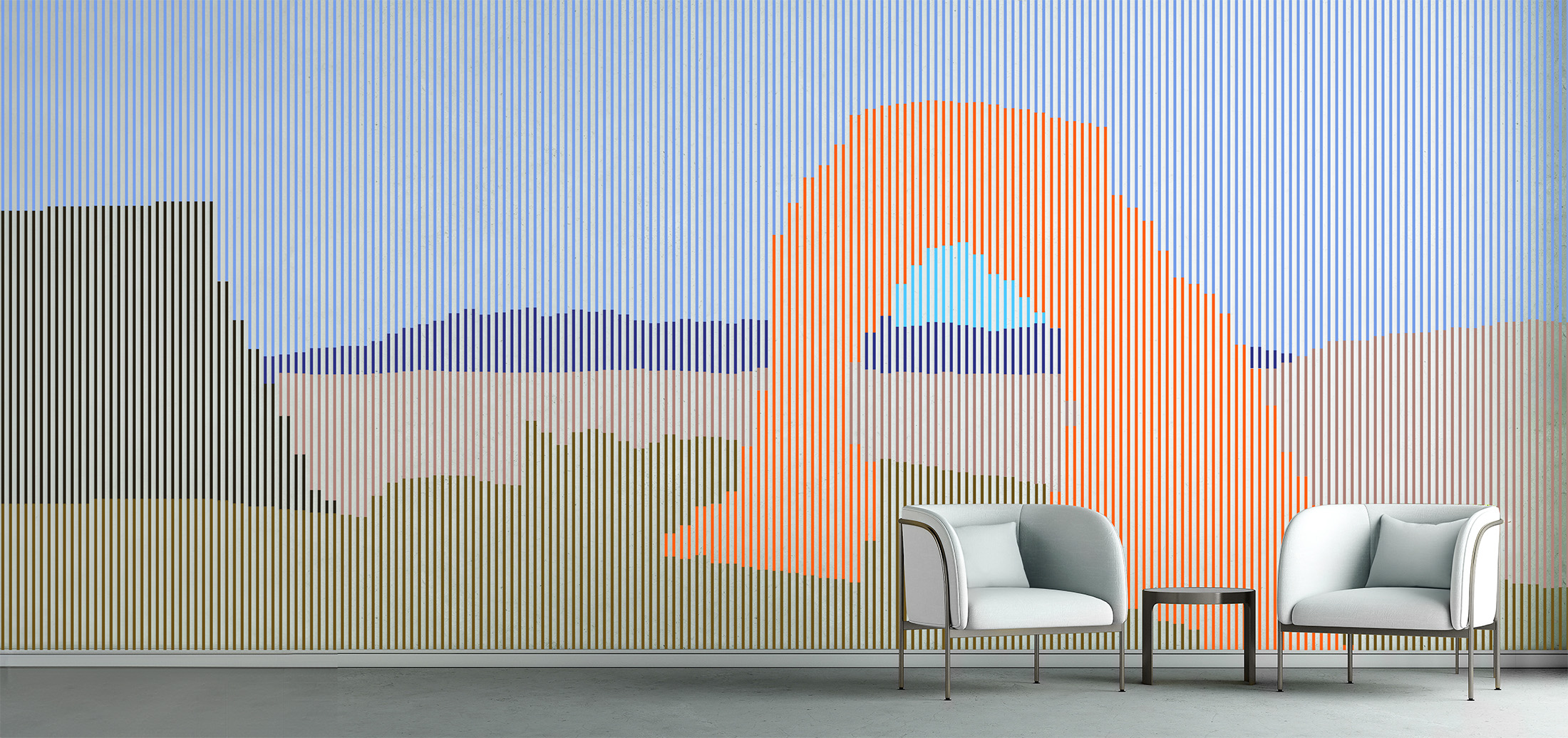
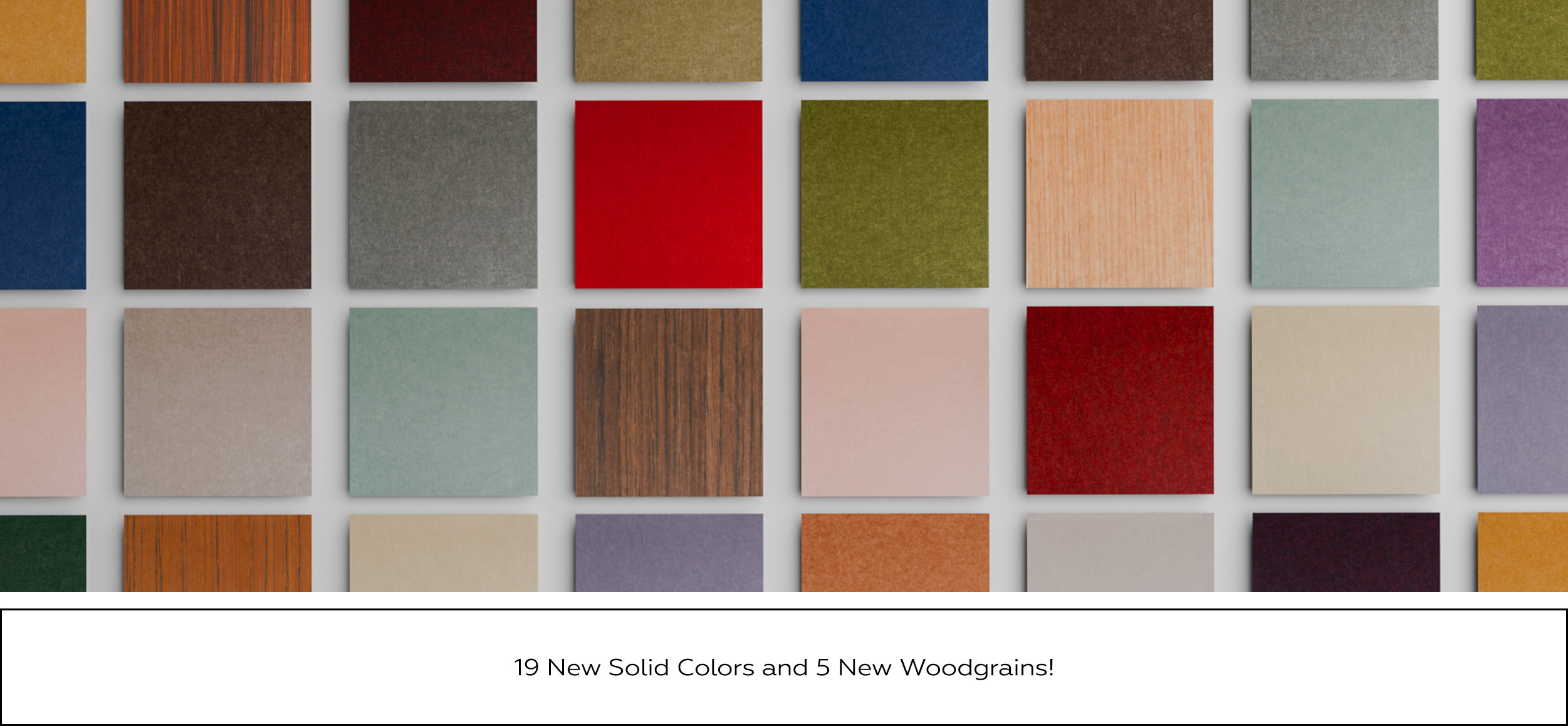
MPS offers a broad standard palette plus woodgrains, ombres, and custom SHADES colors - over 100 options across product lines. Finishes range from solid felt tones to realistic woodgrain patterns and printed designs. Plus, products like Vero offer several real hardwood veneer options. Order samples to confirm color in your space's lighting.
Do you offer wood-look finishes?
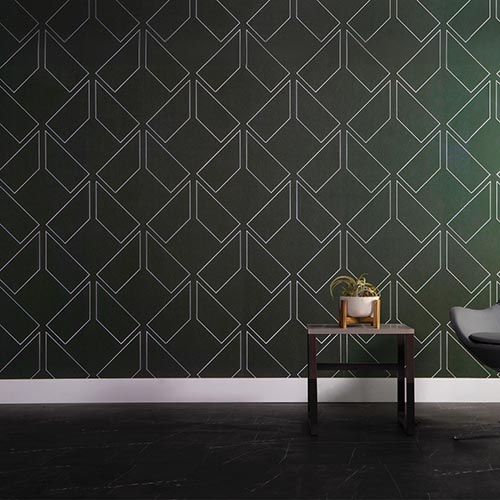
Yes. MPS offers realistic woodgrain felt finishes and slatted wood-look panels that deliver warm, natural aesthetics with acoustic performance and Class A fire safety - without the cost or maintenance of real wood. If you're trying to match a specific wood laminate or stain, send MPS a physical sample and the team will work toward the closest achievable match.
In addition to realistic wood-like printing, MPS offers real hardwood veneer products like Vero, which integrate the classic look of real wood with the functionality of acoustic felt material.
Can graphics, logos, or custom prints be applied to panels?
Yes. MPS can print graphics, patterns, and logos on acoustic felt, and the SHADES system is engineered to protect print quality and design intent. This lets panels carry branding or artwork while still absorbing sound.
Can different colors be combined within one installation?
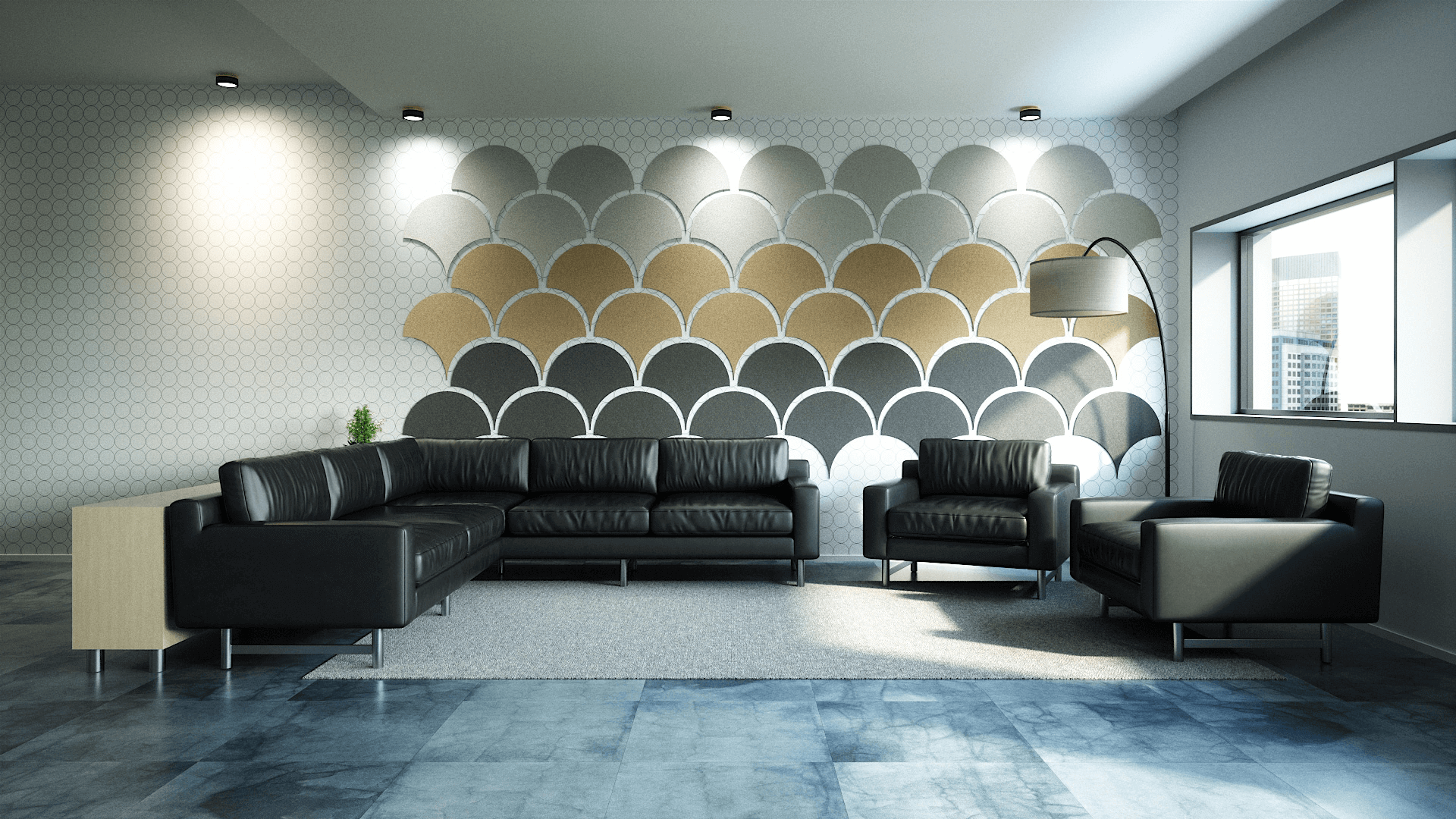
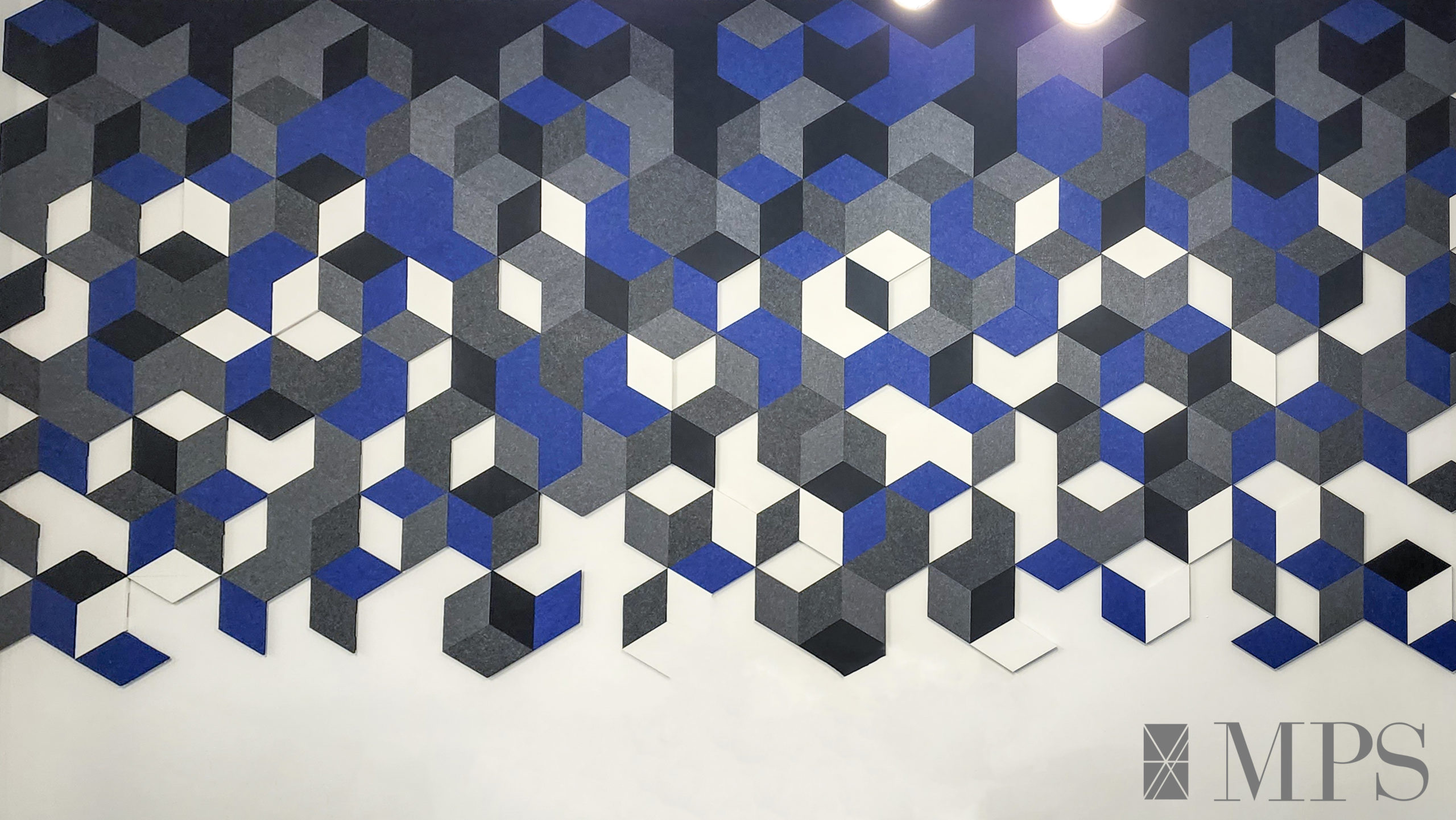
Yes. Multiple colors, woodgrains, and finishes can be combined within a single installation to create patterns, gradients, or brand palettes. MPS can help design multi-color layouts that stay cohesive across the space.
Can colors vary between production runs?
Minor color variation can occur between production runs, as with any manufactured felt product. Per the MPS warranty, reasonable dye-lot variation from order to order or within a shipment is expected with sustainable felt, and the felting process creates a pleasing heathered effect. For large or phased projects, order together or reference a control sample to keep runs consistent.
How do I choose the best color?
Choose color by ordering physical samples and viewing them in your actual space and lighting, since screens distort color. Consider brand palette, surrounding finishes, and whether you want the panels to blend in or stand out. The MPS team can help you decide.
Can products be curved?
Yes. MPS can manufacture curved and dimensional acoustic products for walls, ceilings, and features. Share your radius or geometry and the team will confirm what's achievable for the selected product line.
Can products integrate lighting, HVAC, sprinklers, or electrical fixtures?
Yes. MPS offers LED-integrated acoustic products and can accommodate cutouts and coordination for sprinklers, HVAC diffusers, lighting, and electrical fixtures. Share a reflected ceiling plan so MPS can detail penetrations and keep the installation clean and code-compliant.
Can products be manufactured to match existing installations?
Yes. MPS can often match existing installations for size, color, and profile so additions or expansions blend in. Provide the original product details or a sample; if the exact item has changed, MPS will recommend the closest current match.
What are the size limitations for custom products?
Size limits vary by product line and are driven by material width, structural support, and shipping. Many panels are produced in large formats and modules join for bigger expanses. Share target dimensions and MPS will confirm the maximum single-piece size.
Products & Choosing a Solution
Which acoustic product is right for my project?
The right product depends on your surface, goal, and aesthetic. Use ceiling baffles or clouds for open plans and high ceilings, wall panels where walls are accessible, and sound masking to protect speech privacy. Share your space type and goals and MPS will recommend a tailored combination.
What's the difference between wall panels, ceiling panels, clouds, baffles, and suspended systems?
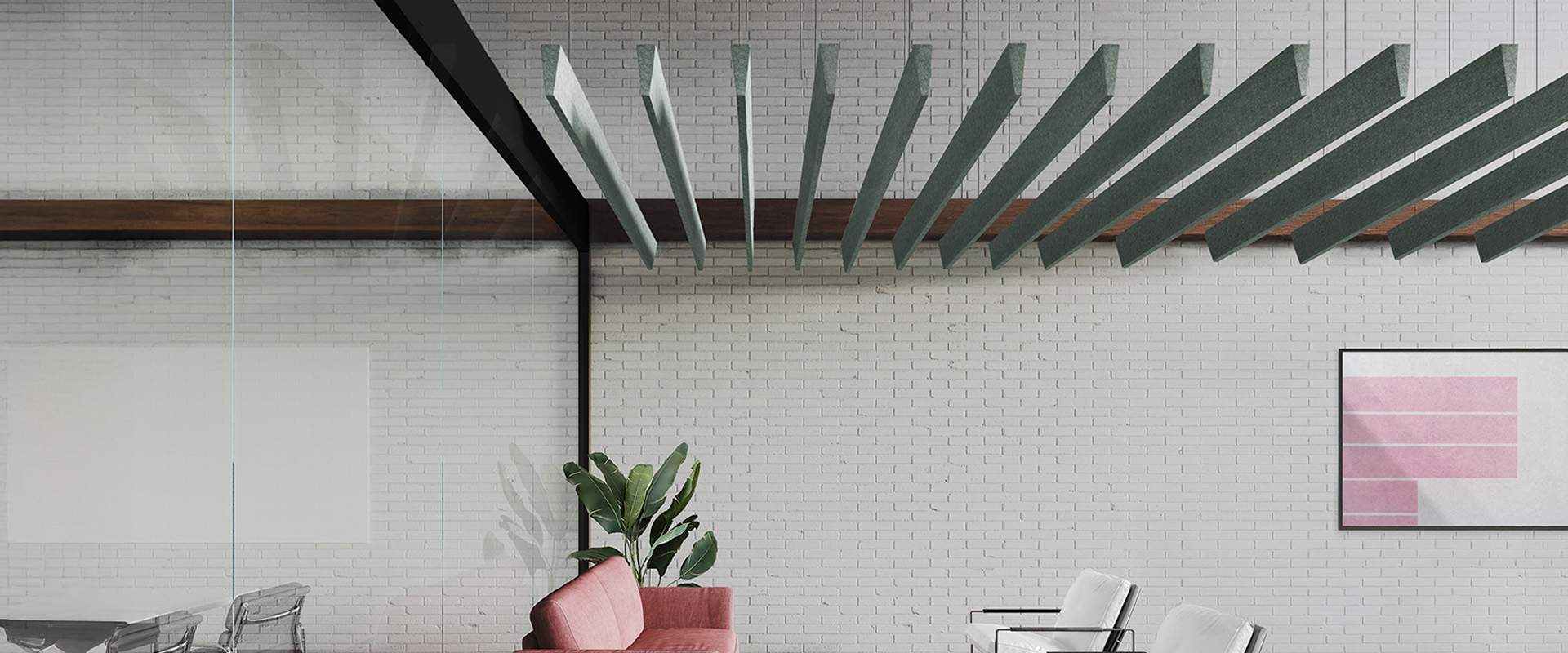
Wall panels mount flat to walls to absorb reflections. Ceiling clouds are horizontal panels suspended below the ceiling. Baffles hang vertically for high sound absorption per square foot. Suspended systems attach to grid or structure. Each targets different surfaces; many projects combine them for full coverage.
Which products provide the best sound absorption?
Baffles and clouds typically deliver the highest absorption because both faces are exposed to sound, and thicker felt absorbs more low frequencies. Absorption also varies with how far a product is spaced off the wall or ceiling, so MPS matches product, thickness, and spacing to your room's reverberation goals.
Which products are best for open office environments?
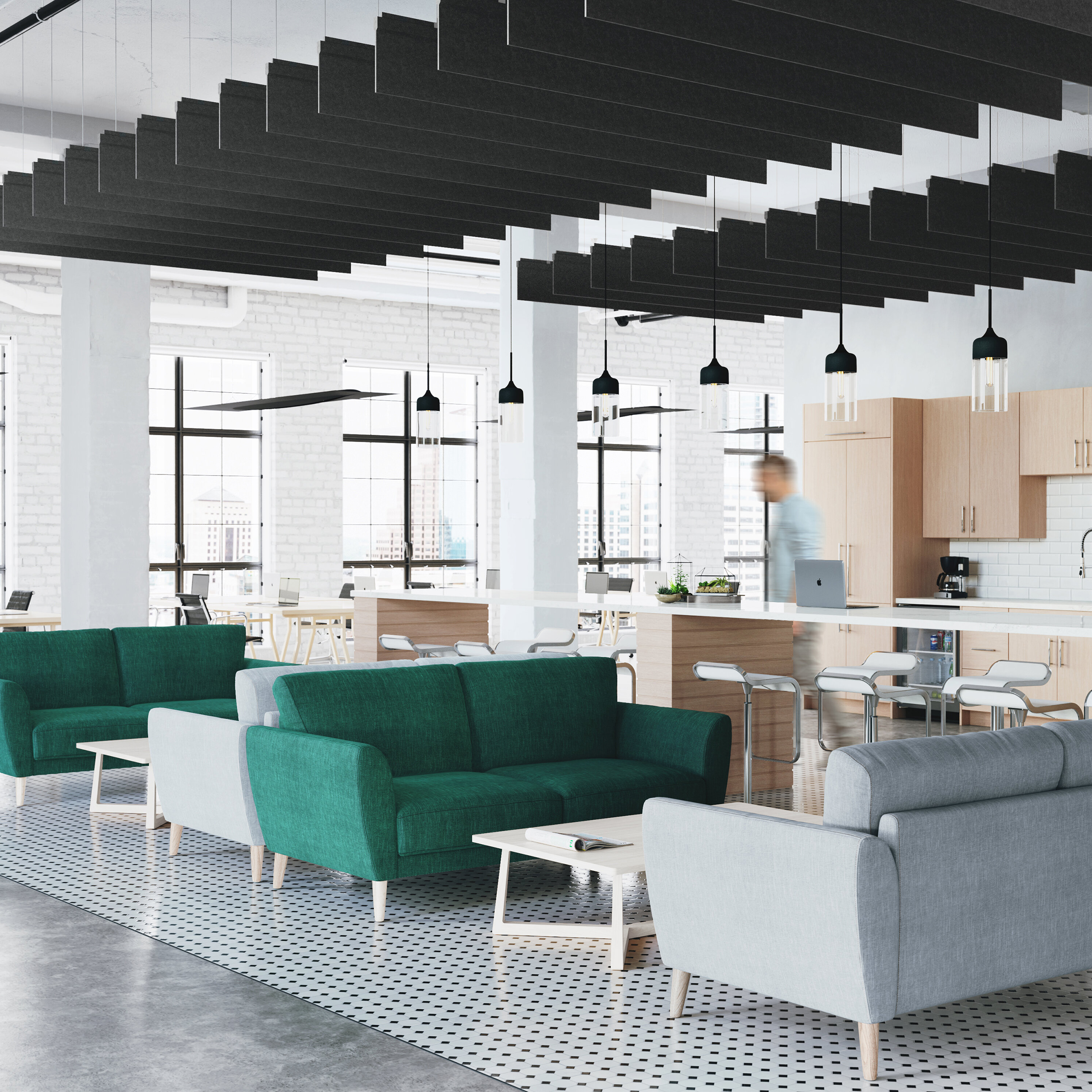
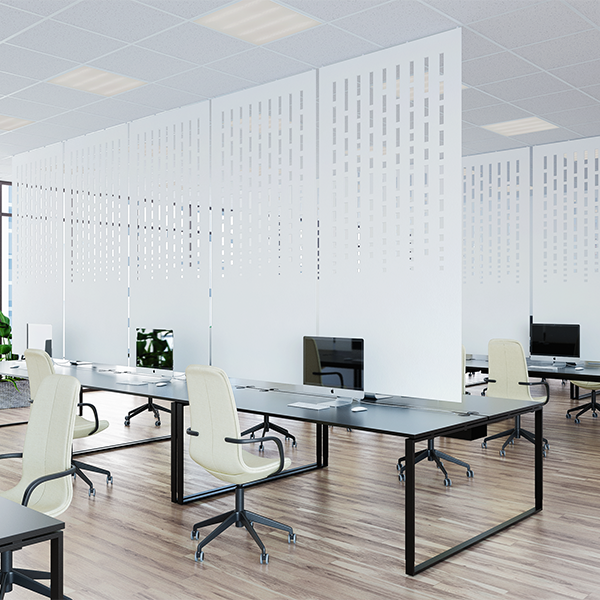
Open offices benefit most from overhead treatment - baffles and clouds - combined with hanging dividers and Voice Arrest sound masking. This layered approach controls echo, reduces overall noise, and protects speech privacy without walls. MPS can design the mix based on ceiling height and layout.
Which products work best in conference rooms?
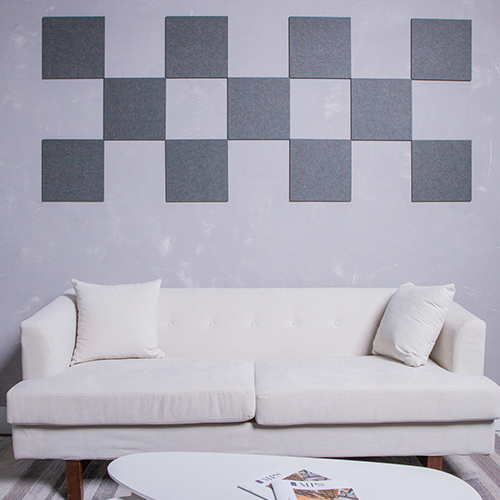
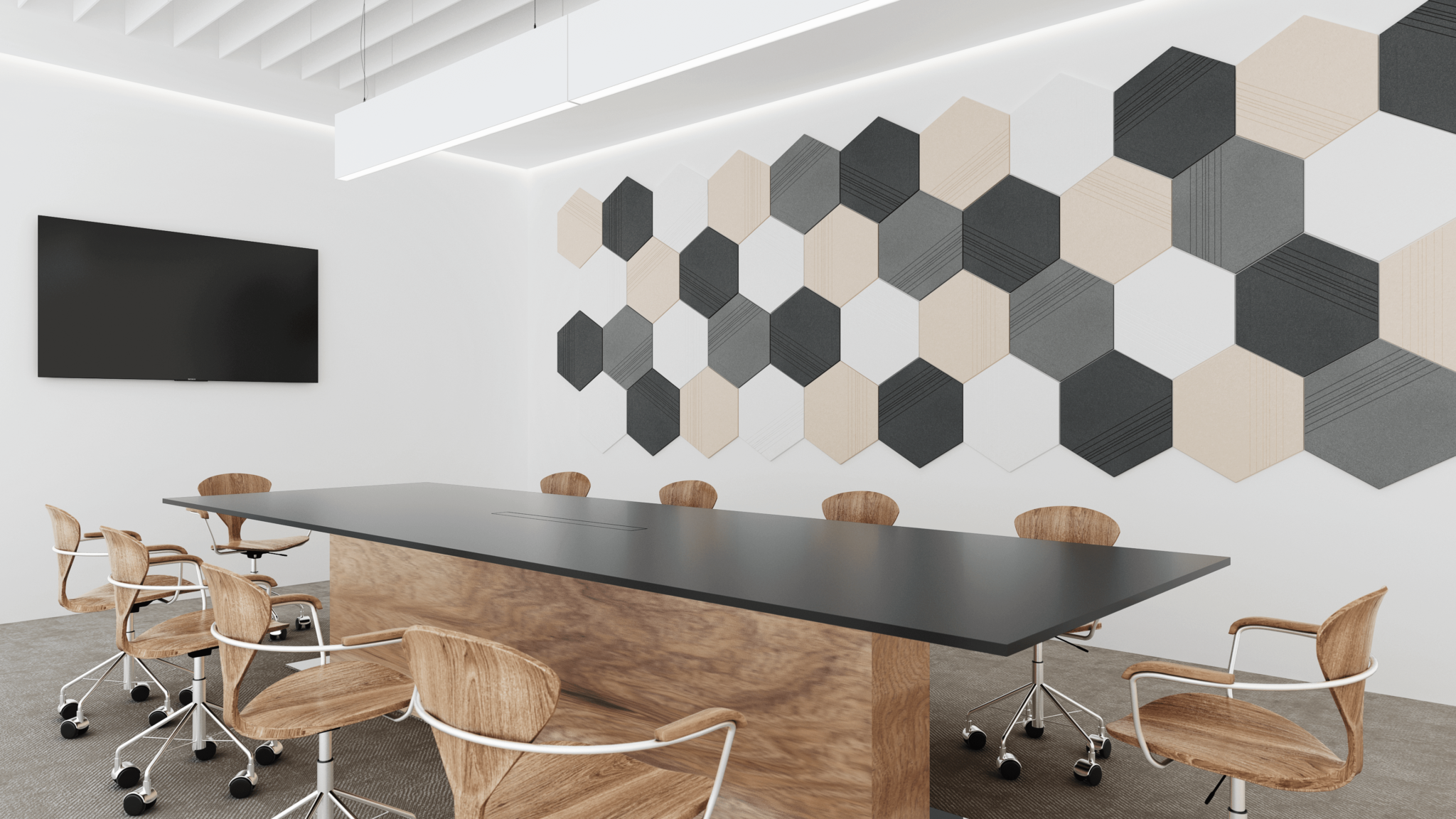
Conference rooms benefit from wall panels on parallel walls plus a ceiling cloud to control echo and improve video-call clarity. Treating first-reflection points sharpens speech intelligibility on Zoom and Teams. MPS recommends coverage based on room size and finishes.
Which products are recommended for educational facilities?
Classrooms and schools benefit from ceiling clouds, baffles, and wall panels that lower reverberation so students hear teachers clearly. MPS Class A fire-rated felt panels are durable and low-maintenance for high-traffic education settings.
Which products are best for healthcare environments?
Healthcare spaces benefit from cleanable, Class A fire-rated panels plus sound masking to support patient privacy. Wall panels and baffles reduce echo in lobbies and corridors, while Voice Arrest masking helps limit overheard conversations at desks and exam areas, supporting HIPAA privacy goals.
Which products are ideal for hospitality projects?
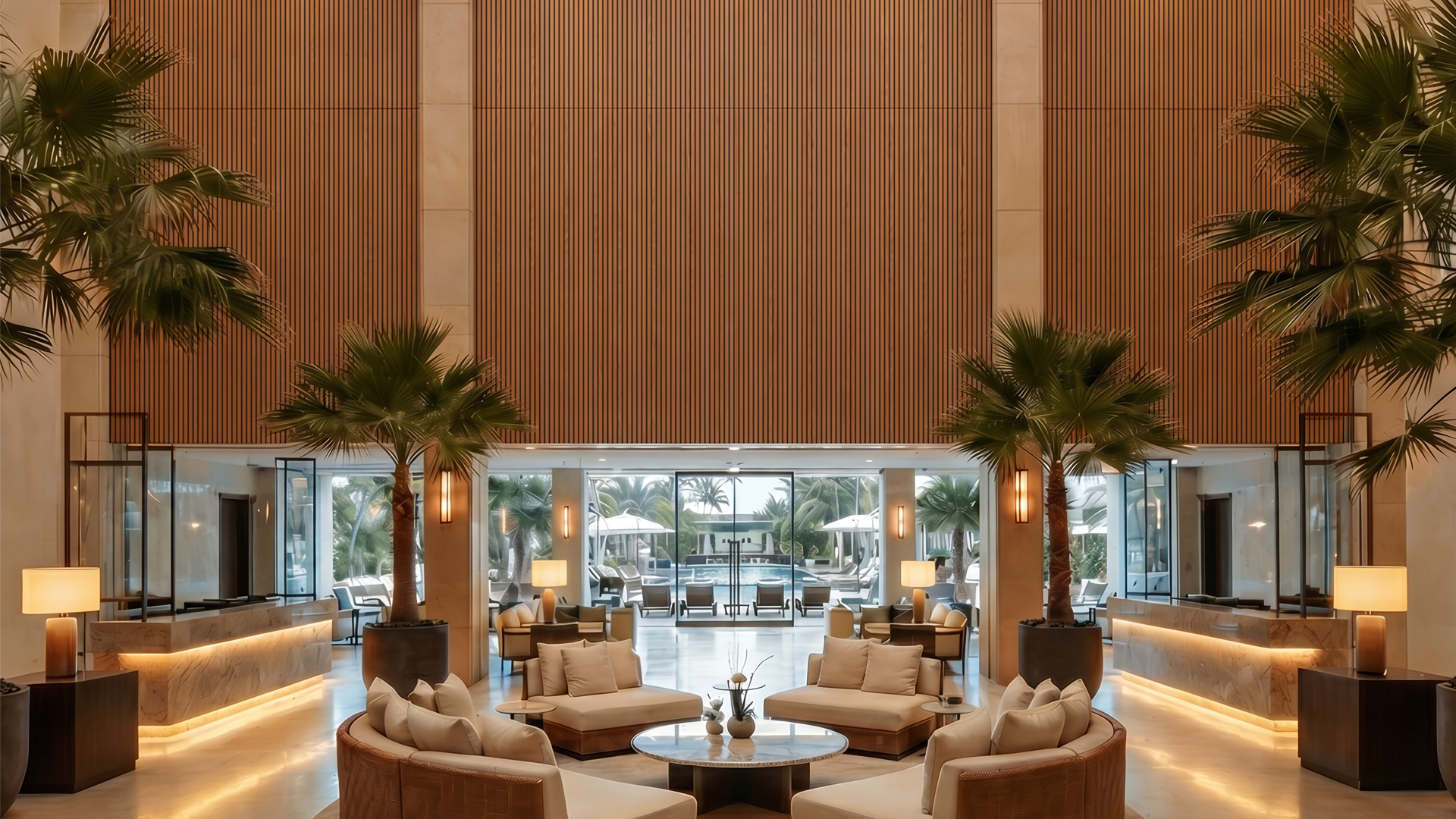
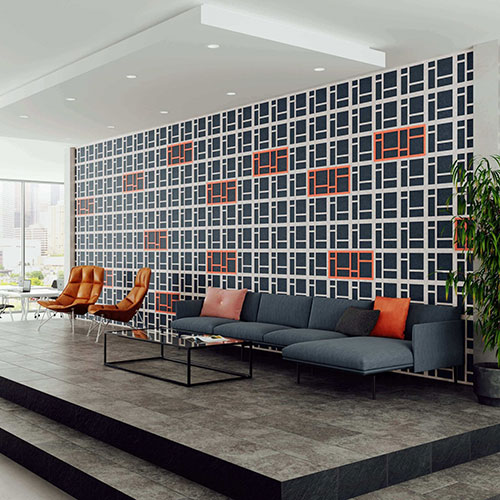
Hospitality projects use decorative wall panels, slatted and etched designs, ceiling clouds, and integrated lighting to control noise while making a design statement. MPS custom colors, shapes, and woodgrains let lobbies, restaurants, and lounges stay quiet and on-brand.
Which products work well in restaurants?
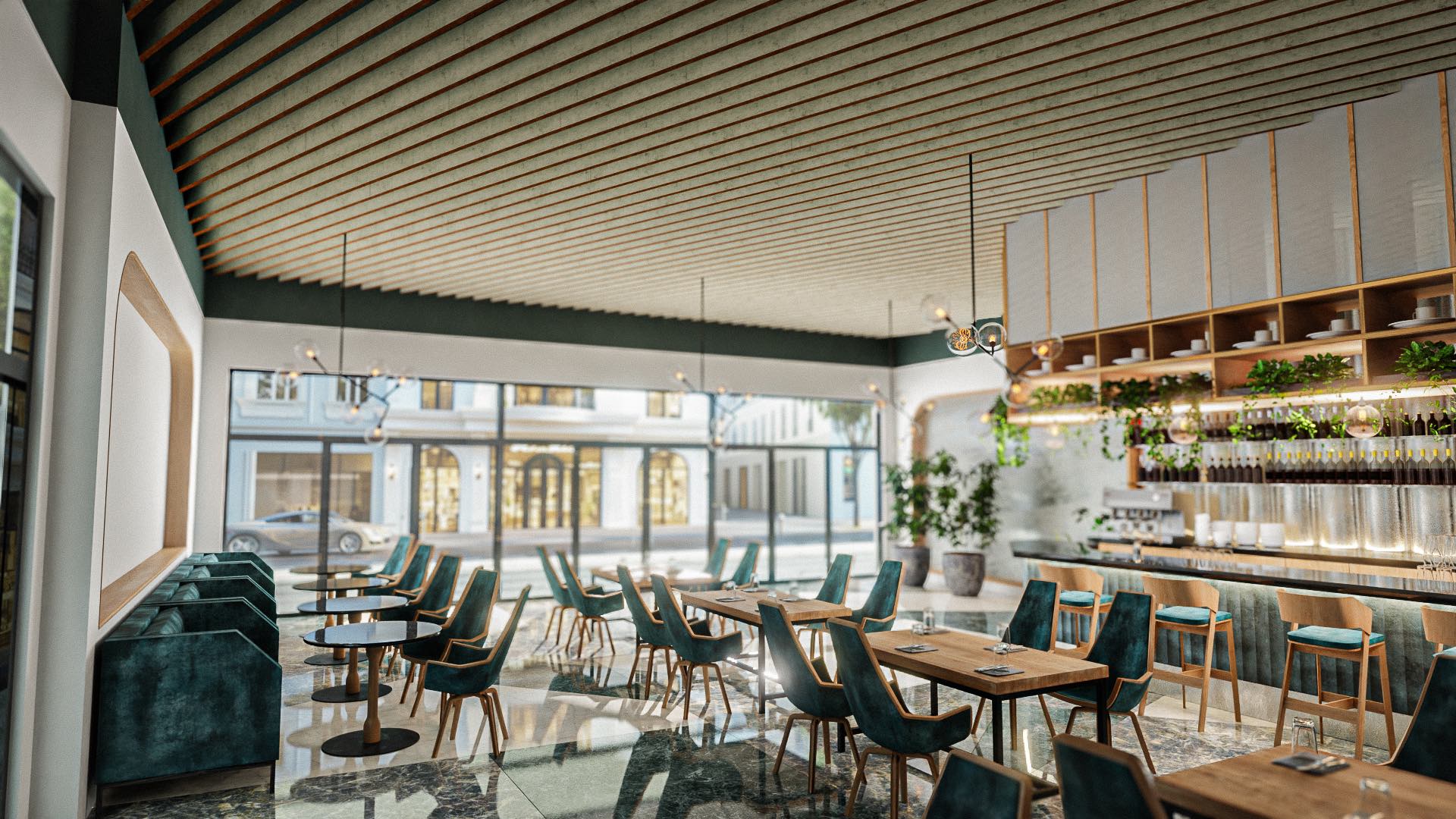
Restaurants benefit from ceiling baffles and clouds plus decorative wall panels that cut echo and lower the overall noise level so guests can converse. Design-forward felt options add warmth and brand character while meeting Class A fire requirements for commercial dining.
Which products are best for high ceilings?
High and open ceilings are best treated with hanging baffles and clouds, which absorb sound on both faces and bring treatment closer to the noise source. This is more effective than wall panels alone in tall lobbies, atriums, and warehouses.
Which products can be installed on existing ceilings?
Many MPS clouds, baffles, and tiles install on existing ceilings, drywall, T-grid, or exposed structure with standard suspension hardware. This makes them ideal for retrofits where you want to improve acoustics without replacing the ceiling.
Can different products be combined within one project?
Yes, and combining products is often the best approach. Pairing wall panels, ceiling baffles or clouds, dividers, and sound masking addresses echo, overall noise, and speech privacy together. MPS designs coordinated systems so finishes and colors work as one cohesive look.
Which products create the greatest visual impact?
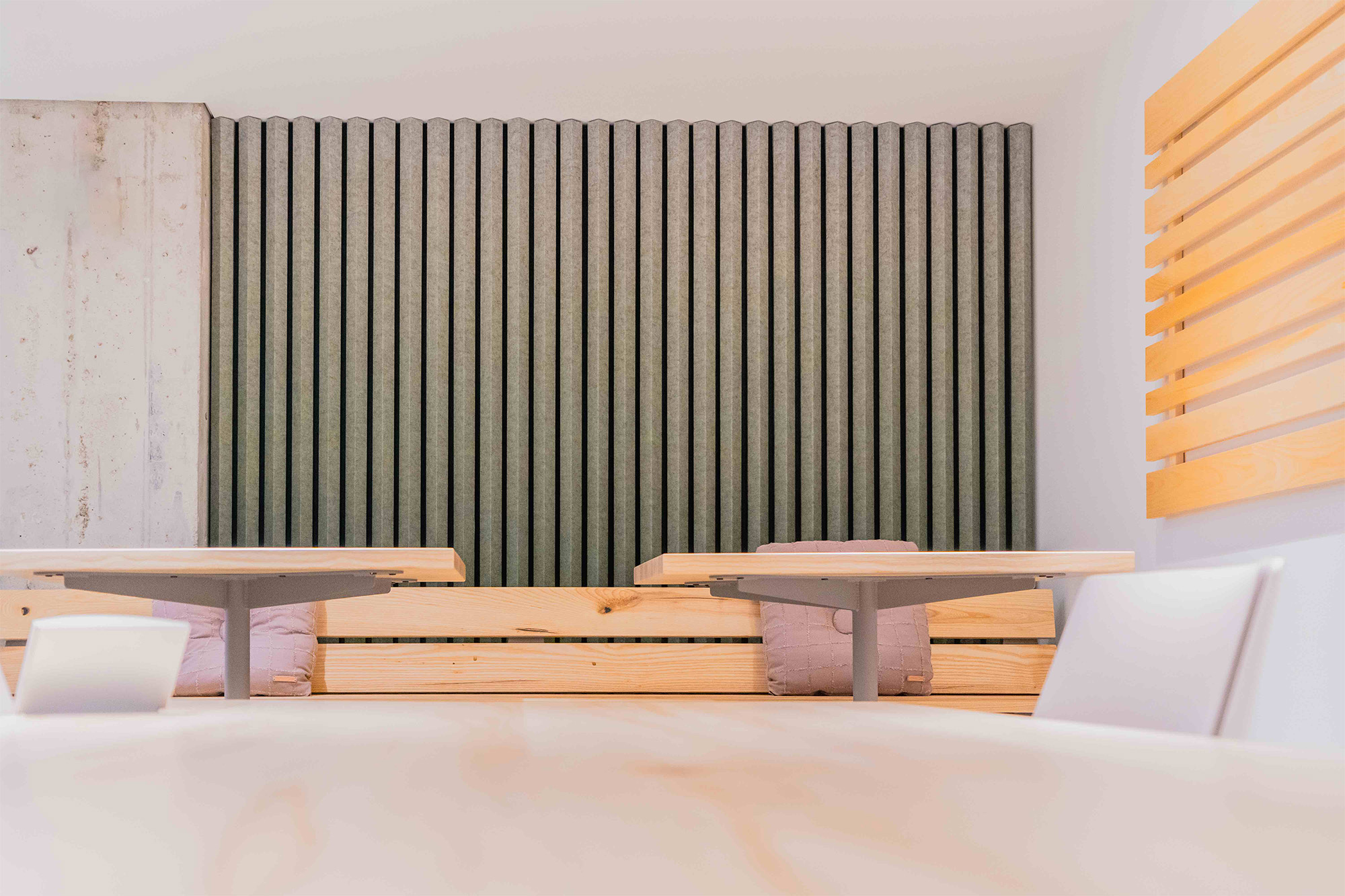
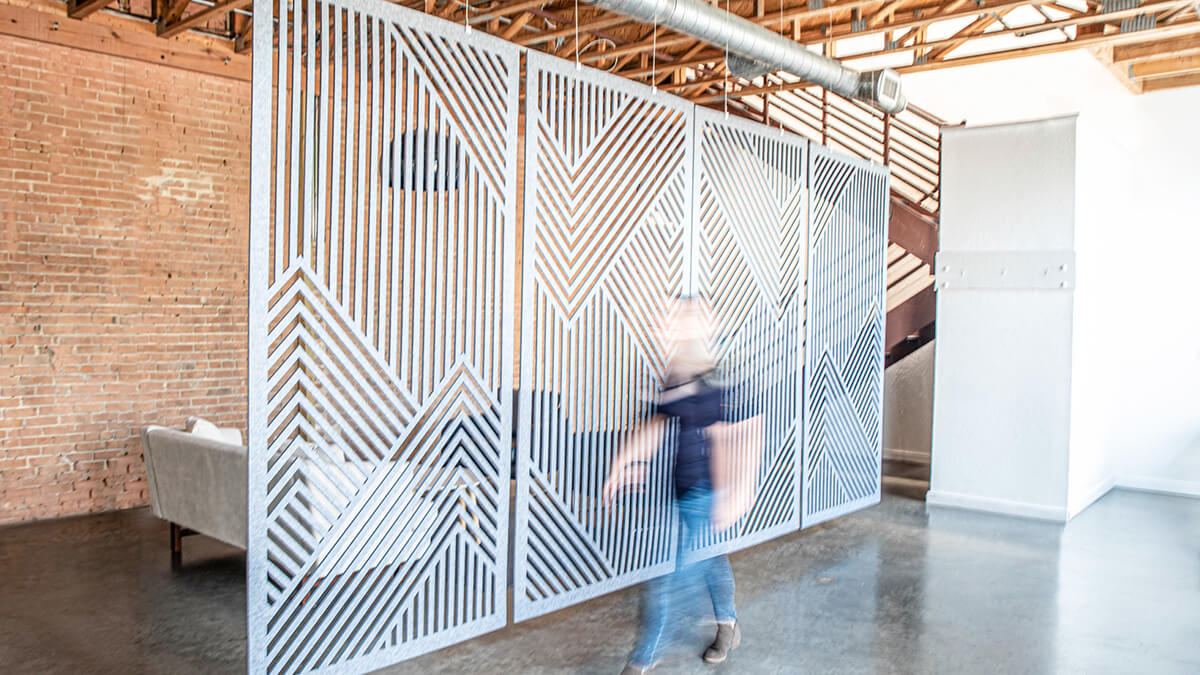
Slatted, etched, and layered panels, sculptural clouds, and LED-integrated baffles create the strongest visual impact while still absorbing sound. Custom shapes, woodgrains, and brand colors let acoustics double as a feature element rather than a hidden utility.
Can products define spaces without walls?
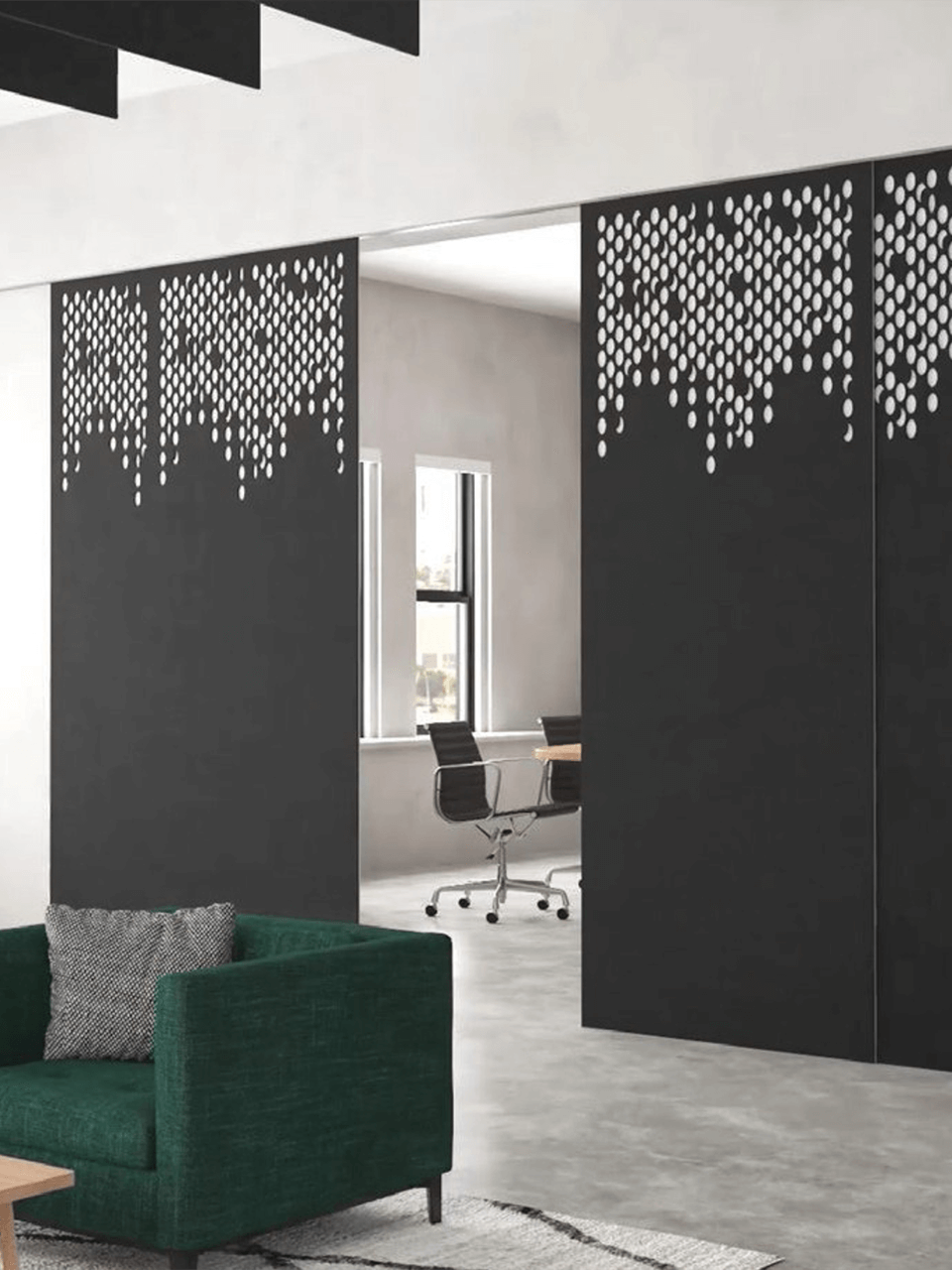
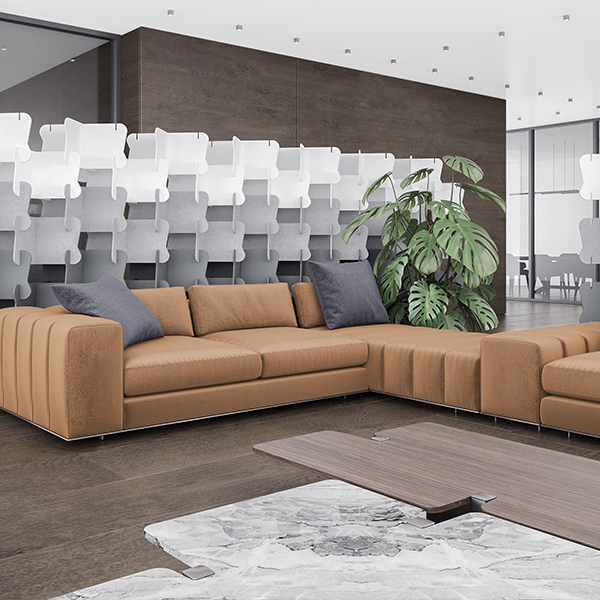
Yes. Hanging dividers, baffles, and clouds visually zone open areas and absorb sound without building permanent walls. This defines meeting zones, focus areas, and circulation paths while keeping sightlines and flexibility open.
Acoustic Performance & Ratings
What is NRC?
NRC (Noise Reduction Coefficient) measures how much sound a material absorbs, from 0 (fully reflective) to 1 (fully absorptive). An NRC of 0.85 means roughly 85% of sound striking the surface is absorbed. Higher NRC means better echo and reverberation control.
What NRC rating do I need?
It depends on the space: general offices target around 0.70-0.80 NRC, while conference rooms, classrooms, and video-call spaces benefit from 0.80 or higher. Rather than one number, focus on total absorption across enough surface area. MPS sizes coverage to hit your goal.
What NRC rating should a conference room have?
Conference rooms generally perform best with high-absorption treatment (NRC 0.80 or above) on walls and ceiling to control echo and keep speech clear on calls. Actual need depends on room size and hard surfaces; MPS calculates the coverage required for your specific room.
What is STC?
STC (Sound Transmission Class) measures how well a partition blocks sound from passing between spaces - higher STC means less sound gets through. STC applies to walls, floors, and ceilings as barriers, not to absorptive panels, which reduce echo within a room rather than blocking transmission.
What STC ratings do MPS products have?
MPS felt panels are absorptive products rated by NRC, not STC, because they reduce echo and reverberation within a room rather than block sound between rooms. For sound isolation between spaces, MPS can advise on assemblies and pair panels with masking.
What's the difference between sound absorption and sound isolation?
Absorption reduces echo and reverberation inside a room by soaking up sound reflections - that's what acoustic panels do. Isolation (or blocking) stops sound from traveling between rooms and requires mass and sealed construction like walls. Most noise complaints in open spaces are absorption problems.
What is the difference between sound absorption, sound blocking, and sound masking?
Absorption reduces echo inside a room (acoustic panels). Blocking stops sound between rooms (walls, mass, seals). Masking adds a low, engineered background sound that covers distracting speech (sound masking systems). Most commercial spaces need a combination; MPS provides absorption and masking, and advises on blocking.
How much sound reduction can I expect?
Acoustic panels reduce echo and reverberation, which makes a space noticeably quieter and speech clearer - often a dramatic perceived improvement - but they don't lower sound transmission between rooms. Actual results depend on coverage and room finishes. MPS can model expected reverberation reduction for your space.
Will acoustic panels eliminate echo?
Acoustic panels dramatically reduce echo and reverberation when enough absorptive surface area is added, though 'eliminating' echo entirely is rarely the goal or necessary. MPS calculates the coverage needed to bring your room to a comfortable, natural reverberation level.
Will acoustic panels block sound between rooms?
No. Absorptive acoustic panels reduce echo within a room but do not block sound traveling between rooms. Blocking sound requires mass and sealed construction. To limit overheard conversations, pair absorption with Voice Arrest sound masking or address the wall assembly.
How do acoustic panels work?
Acoustic panels work by absorbing sound energy instead of reflecting it. Porous felt lets sound waves enter the material, where friction converts the energy to a tiny amount of heat. This reduces reflections, echo, and reverberation, making speech clearer and the room quieter.
What is reverberation time (RT60)?
RT60 is the time it takes for sound to decay by 60 decibels after the source stops - essentially how long echo lingers. Long RT60 makes rooms sound loud and speech muddy. Adding absorption lowers RT60; MPS targets comfortable ranges for each room type.
What causes echo?
Echo and reverberation are caused by sound reflecting off hard surfaces like glass, drywall, concrete, and hard floors. With few absorptive materials, sound bounces repeatedly before fading, raising noise levels and blurring speech. Adding absorptive panels breaks up those reflections.
What is speech privacy?
Speech privacy is the degree to which conversations can't be overheard or understood by others nearby. It's improved by reducing reflections (absorption), blocking sound (barriers), and raising the background level so speech blends in (sound masking). Open offices and healthcare settings especially benefit.
Why are open offices so noisy?
Open offices are noisy because hard surfaces reflect sound, there are no walls to block conversations, and voices carry across the floor. Without absorption and masking, every conversation, call, and keyboard adds to a distracting din. Layered acoustic treatment solves this.
Can your products help meet WELL Building requirements?
Yes. MPS acoustic panels and sound masking can support WELL Building acoustic features by reducing reverberation and background noise and improving speech privacy. MPS can provide product data to help document applicable credits.
Can your products contribute to LEED certification?
Yes. MPS products can contribute toward LEED credits through recycled content, low-emitting materials, and acoustic performance categories. An HPD and Sustainability Statement are available on the Sustainability page to support your submission.
Design, Specification & Samples
Does MPS offer design services?
Yes. MPS provides in-house design support to help select products, plan layouts, and optimize acoustics for your space. From concept through installation, the team helps translate acoustic goals and aesthetics into a specified, buildable solution - generally at no additional cost, though highly custom projects may involve a design fee that MPS will confirm with you.
Can MPS help specify products?
Yes. MPS helps architects and designers specify the right products, quantities, finishes, and details, and can provide specification language, CSI-format specs, and drawings to include in your construction documents.
Can the MPS team recommend layouts and quantities?
Yes. MPS can recommend panel layouts and calculate the quantities needed to reach your acoustic target based on room dimensions, ceiling height, and surface finishes. Share a floor plan or drawings and the team will propose an optimized layout.
Does MPS review architectural drawings?
Yes. MPS reviews architectural drawings and reflected ceiling plans to recommend products, coordinate layouts, and confirm quantities. Early drawing review helps avoid conflicts with lighting, HVAC, and sprinklers before installation.
Does MPS provide reflected ceiling plans and shop drawings?
Yes. MPS can provide reflected ceiling plans and shop drawings for approval so contractors know exactly what to install and where.
Does MPS offer acoustic consulting?
MPS provides practical acoustic guidance - evaluating your space, estimating reverberation, and recommending product and coverage to meet your goals. For complex projects requiring formal third-party acoustic analysis, MPS can coordinate with your acoustic consultant.
Can MPS help value engineer a project?
Yes. MPS can value engineer acoustic scopes by suggesting products and coverage that meet performance goals at a better price point, or by phasing work. Share your target and budget and the team will propose cost-effective options that preserve acoustic outcomes.
Can I order samples?
Yes. MPS offers color swatches and finish samples through the samples page. The page provides current ordering options; confirm availability, charges, and timing for custom requests.
Are finish samples and sample kits available?
Yes. MPS offers color swatches for every standard color, plus custom samples on request - all through the Order Samples page. Many custom colors are available through the SHADES program, so you can evaluate options in your actual lighting before ordering.
How quickly are samples shipped, and is there a charge?
Order standard or custom samples through the samples page. MPS will confirm any applicable charge and timing for the requested samples.
Can I ship samples back to MPS when I'm done with them?
At this time, MPS does not offer a sample ship-back program. In our experience, returned samples are rarely in condition suitable for reuse to our standards, and shipping them back introduces additional fuel costs and associated carbon emissions without meaningful material recovery, as they typically must be discarded. Instead, we recommend local reuse. Many firms successfully donate samples to primary schools for craft projects or to design programs for material boards and concept work. This approach keeps materials in the community and extends their useful life in a practical, lower-impact way.
Can products become a design feature?
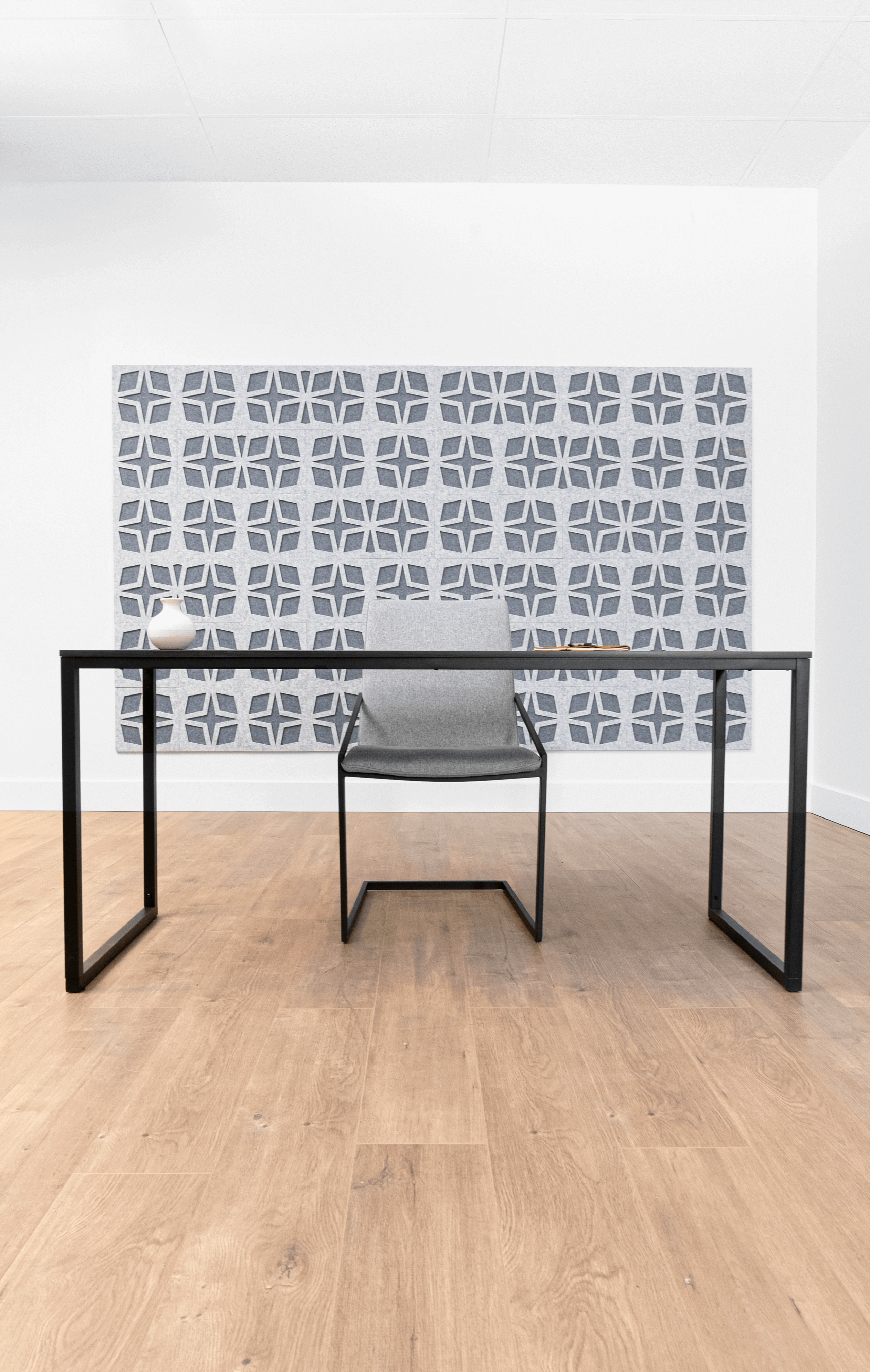
Absolutely. With custom shapes, colors, woodgrains, slatted and etched patterns, and integrated lighting, MPS acoustic products routinely serve as feature walls and ceiling statements. Acoustics and design are treated together, so performance and aesthetics reinforce each other.
What acoustic trends are architects using?
Architects are using slatted wood-look panels, sculptural clouds, curved and dimensional wall panels, biophilic and warm felt tones, and acoustics integrated with lighting. The trend is treating acoustic treatment as an intentional design feature rather than hidden infrastructure.
Specifications, Certifications & Sustainability
Where can I download product specifications?
Product specifications, data sheets, and installation details are available in the Resources/Downloads section at mpsacoustics.com. Some downloads require a short form, but all are free. You can also request specific documentation from your MPS rep for a given product or project.
Are CAD, Revit, and BIM files available?
Yes. MPS provides CAD details and Revit/BIM objects to support design and coordination. CAD and Revit availability varies by product but is standard for most lines. Find them in the Resources/Downloads section, or if your project needs a custom file that isn't posted, just ask your MPS rep and the team can prepare it for you.
Can I download CSI specifications?
Yes. MPS provides CSI-format specification language to include in your project manual - available both from the Resources/Downloads section and on request. MPS can also tailor specs to your specific product selection and project.
Where can I find installation details?
Product-specific installation instructions and details are available in the Resources/Downloads section. MPS can provide product-specific guidance and installation support on request.
What panel thickness and size options are available?
MPS acoustic felt is 9mm thick, and products layer or build the felt to reach greater profiles (for example, up to 2" on lines like Arete). Thicker builds and air gaps improve low-frequency absorption. See individual product pages for the standard and custom size options per line.
How much do panels weigh?
MPS felt panels are lightweight relative to many acoustic materials, which simplifies handling and installation. Exact weight depends on product, thickness, and size - your MPS rep can confirm weights for structural and hanging calculations.
What fire ratings do MPS products have? Are they Class A?
Fire ratings are product-specific. Where documented, applicable MPS felt products/components are tested to ASTM E84 Class A requirements. Review the product data sheet for the exact product being specified.
What certifications do your products carry and what testing standards do you follow?
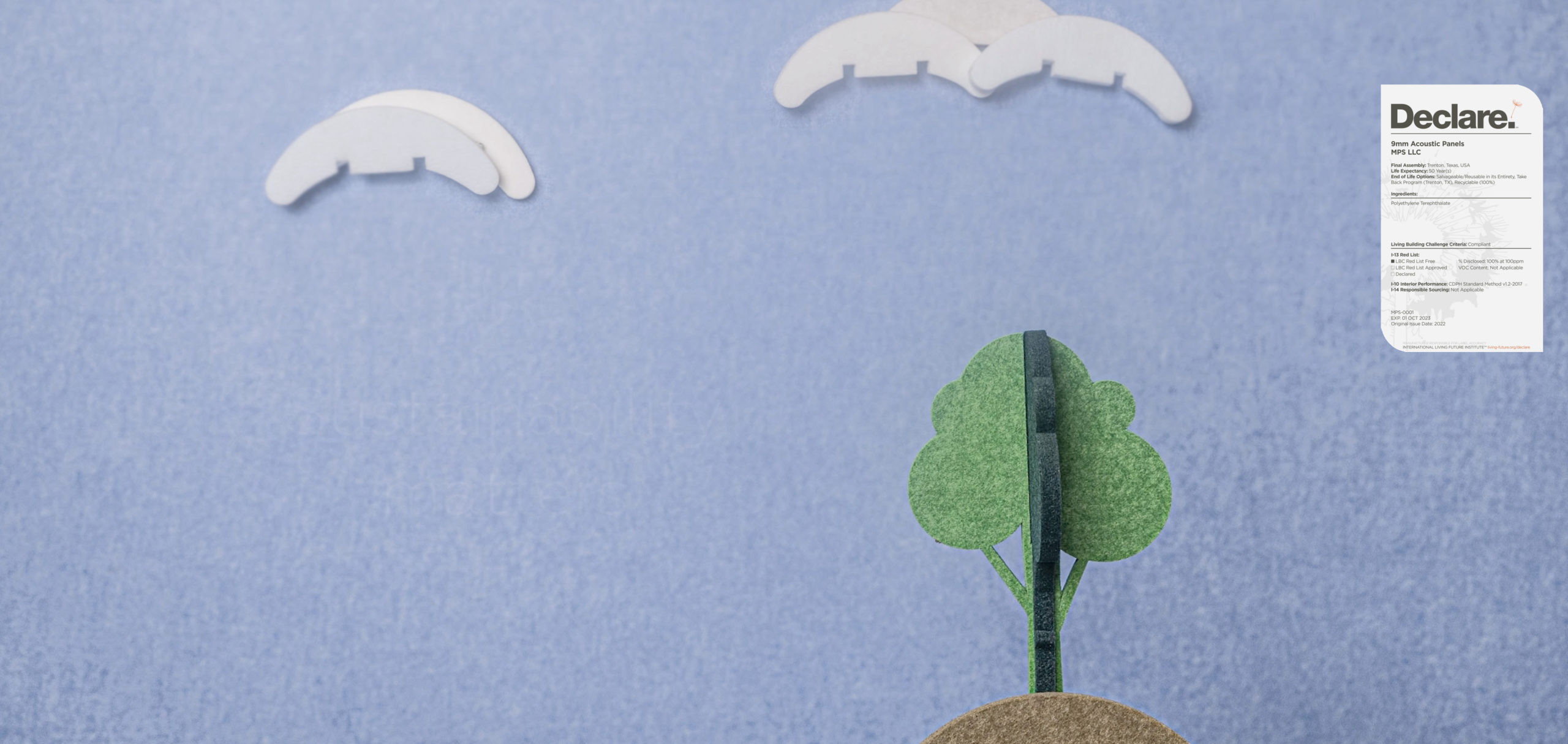
MPS publishes product testing and sustainability information, including applicable ASTM fire and acoustic test data, an HPD, a Sustainability Statement, and Declare information. See the Sustainability page and the product documentation for the exact product.
Are products moisture resistant, and can they be used outdoors?
MPS products are intended for interior applications. Confirm suitability for moisture, humidity, outdoor exposure, or any unusual environment with MPS for the specific product.
Can products be used in seismic applications?
Seismic requirements depend on the product, structure, jurisdiction, and attachment method. Share the project requirements with MPS and the project engineer to confirm whether the proposed installation is suitable.
What is the expected lifespan of the panels?
MPS felt panels are durable and color-stable for long service in commercial interiors because performance comes from the material itself, not sprays or coatings that degrade. With normal use they last many years, and MPS warrants its acoustic material, hardware, and mounting equipment for two years against defects.
Are your products environmentally friendly and sustainable?
MPS states that its acoustic felt is made from low-VOC, 60% recycled polyester felt, and that hardware, fasteners, and frame components use recycled aluminum. See the Sustainability page for current material and process information.
Do your products contain recycled content and are they recyclable?
Yes. MPS PET felt contains roughly 60% recycled content, primarily from post-consumer plastic, and hardware and frame components use recycled aluminum. The material is recyclable where PET recycling is available. For end-of-life handling on a specific project, contact MPS to discuss the options available in your area.
Are low-VOC materials used?
Yes. MPS felt is non-toxic and low-VOC, using no degrading sprays or coatings, which supports healthy indoor air quality. See the HPD and Sustainability Statement on the Sustainability page for material-health details.
Do you publish EPDs and HPDs, and are sustainability documents available?
MPS publishes an HPD (Health Product Declaration), a Sustainability Statement, and Declare information on the Sustainability page. An EPD was not identified among the current public sustainability documents; contact MPS if an EPD is required.
Do MPS panels shed microplastics?
PET panels are made from recycled content polyester fibers that are thermally bonded into a dense, non-woven sheet. Although PET is a plastic polymer, properly manufactured architectural panels are structurally stable and do not continuously shed microplastics under normal interior use. Because the fibers are heat-fused and non-friable, they do not release loose particulates therefore, microplastic generation would only occur under aggressive mechanical abrasion or endof-life degradation, not during typical wall or ceiling applications.
Installation
Are MPS products easy to install, and can our contractor install them?
Yes. MPS products are designed for straightforward installation, and your own contractor, drywall crew, or AV installer can typically handle them using standard tools and the provided instructions. MPS also offers installation support if questions come up on site.
Do you provide installation instructions?
MPS provides product-specific installation guides through the Resources/Downloads section and can provide installation support and guidance on request.
Do you offer installation support or certified installers?
MPS provides installation guidance and support, and can help connect you with qualified installers in many regions. MPS doesn't maintain a public certified-installer list, so for turnkey needs, ask your rep about installation options for your area.
How long does installation typically take?
Installation time depends on product, quantity, and site conditions, but MPS systems are engineered to install efficiently. Wall panels and grid-mounted tiles go quickly; suspended baffles and clouds take longer to lay out and level. MPS can help estimate labor for your specific scope.
What tools are required, and can products be field cut?
Most installations need only common tools such as a level, drill, and standard fasteners. Many felt products can be field-cut with a sharp blade for outlets, sprinklers, and fit adjustments. Confirm field-cutting for your specific product, since some finishes and edges are best factory-finished.
Can panels be removed, relocated, or replaced individually after installation?
Yes. Many MPS products can be removed and reused, relocated during renovations, and individual damaged panels replaced without redoing the whole system. This makes MPS practical for churn-heavy offices and phased spaces.
How should products be stored onsite before installation?
Store panels flat, indoors, in a clean, dry, climate-controlled area, protected from moisture and heavy loads, until installation. Keep them in original packaging and let them acclimate to interior conditions. Proper storage prevents warping, soiling, and color issues.
What coordination is required before installation, and what mistakes should be avoided?
Before installing, coordinate panel layout with lighting, HVAC, sprinklers, and structure using a reflected ceiling plan, and confirm mounting heights and hardware. Common mistakes include insufficient coverage, uneven spacing, and ignoring first-reflection points. Early MPS drawing review prevents most issues.
Can installation occur after occupancy?
Yes. Many MPS products install cleanly in occupied spaces with minimal disruption, making them ideal for retrofits and upgrades. Baffles, clouds, and wall panels can often be added after move-in, and sound masking is frequently installed in occupied buildings.
Lead Times, Ordering & Logistics
How do I request a quote, and what information is needed?
Request a quote through our quote tool or by contacting us directly. Helpful information includes room type and dimensions, product interest, quantities or coverage, finishes/colors, target install date, and drawings if available. The more detail, the faster and more accurate the quote.
How quickly will I receive a quote?
Quote timing depends on the completeness and complexity of the request. Providing project details and drawings up front can help MPS respond more efficiently; tell your rep about any bid deadline.
What are your standard lead times, and can you expedite?
Lead times depend on product, customization, order size, current production capacity, and shipping. Ask MPS to confirm the current production schedule and whether expedited options are available.
How long does custom manufacturing take, and what affects lead times?
Custom manufacturing timing depends on the scope, customization level, color/SHADES processing, order quantity, current production capacity, and shipping. MPS will confirm the schedule for each project.
How early should products be ordered?
Order as early as your finishes are confirmed - ideally once colors, sizes, and quantities are locked and drawings approved. Building in buffer time before your install date protects against schedule risk. For phased projects, MPS can align deliveries to your construction sequence.
Can I order directly, or do you sell through dealers?
MPS works with customers directly and through a network of manufacturer's reps and dealers, depending on your region and project type. Contact MPS to discuss the best purchasing path for your situation.
Is there a minimum order, and do you offer volume pricing?
There are no minimums on sample orders. For project purchasing questions and volume pricing on larger projects, contact MPS to discuss your specific situation - the team can prepare project-based pricing based on quantity, product mix, and timeline.
Can I modify, reorder, cancel, or partially ship an order?
Reorders are supported, and orders can frequently be phased or partially shipped to match your schedule. For changes or cancellations, work with MPS directly and the team will help navigate the situation with you; once custom manufacturing starts, changes may be more limited.
How are products packaged and shipped, and how do I track my order?
MPS coordinates packaging, shipping information, and delivery timing for each project. Confirm the carrier, jobsite delivery requirements, and tracking details with MPS or your representative.
How are shipping damages handled?
Inspect shipments on arrival and take photos of any visible damage to the packaging and product, note the damage on the delivery receipt, then submit any damage claim directly to the carrier along with the photos. MPS can help you coordinate replacements.
Do you ship to the jobsite, and can shipments be coordinated with project schedules?
Yes. MPS ships directly to jobsites and can coordinate deliveries with your construction schedule, including phased shipments for large or multi-area projects. Share your install dates and MPS will time freight to match.
How are large and multi-location projects handled?
MPS supports large and multi-location rollouts with coordinated production, phased shipping, and consistent finishes across sites. A dedicated project contact keeps quantities, colors, and timing aligned so every location matches. Share your locations and schedule to plan the rollout.
Maintenance & Warranty
How do I clean and maintain acoustic panels?
Clean MPS felt panels by regular light vacuuming with a soft brush attachment to remove dust, and spot-clean minor marks gently. Avoid soaking the felt. Because color comes from the material rather than a surface coating, panels stay looking good with minimal maintenance.
Can panels be vacuumed, and how often should they be cleaned?
Yes, vacuuming with a soft brush attachment is the recommended routine cleaning method. Frequency depends on the environment - periodic dusting in typical offices, more often in high-traffic or dusty areas. Regular light maintenance prevents buildup and keeps the felt looking fresh.
What cleaning products should be avoided?
Avoid harsh solvents, bleach, and saturating the felt with liquid, which can damage fibers or affect color. Use gentle spot-cleaning methods and test any cleaner in an inconspicuous area first. Note that improper cleaning can void the MPS warranty, so always test gently first.
Can damaged panels be repaired or replaced?
Minor damage can sometimes be spot-repaired, and because MPS uses modular products, individual damaged panels can typically be replaced without redoing the whole installation. Contact MPS with the product details to match a replacement.
Do colors fade over time?
MPS recommends evaluating color in the intended interior lighting and following its cleaning guidance. Confirm any fade-resistance requirement with MPS for the selected product and application.
Which products require the least maintenance?
Most MPS felt panels are low-maintenance, needing only occasional vacuuming. Simpler flat wall panels and ceiling tiles in accessible locations are easiest to maintain, while highly textured or very high-mounted pieces collect dust more slowly but are harder to reach. All avoid degrading coatings.
What warranty do you offer and what does it cover?
MPS warrants the acoustic material, hardware, and mounting equipment for two (2) years from the date of purchase against defects in materials and workmanship. It excludes damage from negligence, misuse, alteration, improper cleaning, stains, or accidents, and applies to original purchasers who bought through authorized channels. The full written warranty is available at mpsacoustics.com.
How do I submit a warranty claim?
During the warranty period, apply directly to MPS for a return authorization number, then ship the defective component(s) to MPS; repaired or new parts generally ship back within five business days. If you purchased through a dealer other than MPS, submit the request to that dealer.
What technical support is available, and who do I contact after installation?
MPS provides technical support before, during, and after installation. For questions after install - product care, additions, replacements, or troubleshooting sound masking - contact your MPS rep or MPS directly at 866-557-8438. The team can review your project and recommend next steps.
Sound Masking
What is sound masking and how does it work?
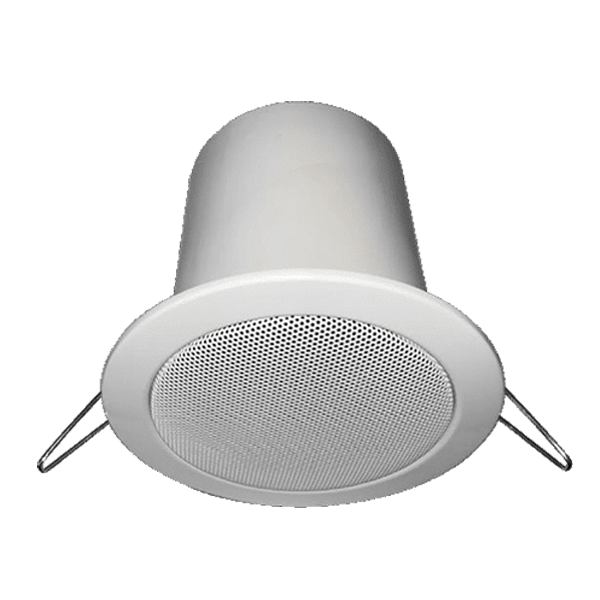
Sound masking is a technology that adds a low, engineered background sound - tuned to the frequency of human speech - through ceiling or under-desk speakers. By gently raising the ambient sound floor, it makes nearby conversations harder to understand, improving speech privacy and reducing distraction without being noticeable.
Is sound masking the same as white noise? What's the difference?
No. White noise is an equal-energy hiss that people find harsh, while sound masking is specifically engineered and tuned to match the frequencies of human speech so it blends into the background. Masking is far less noticeable and more effective at covering conversations than raw white noise.
Why is sound masking used in commercial spaces?
Commercial spaces use sound masking to improve speech privacy, reduce distraction, and make open plans more comfortable and productive. It covers the intelligibility of nearby conversations and calls, so employees are less interrupted and confidential discussions are harder to overhear - all without building walls.
Does sound masking reduce noise or block conversations?
Sound masking doesn't reduce the volume of noise or physically block sound - it raises the background sound floor so speech becomes less intelligible and less distracting. Conversations don't disappear; they become harder to understand at a distance, which is what protects privacy and focus.
Can people hear the sound masking system, and is it distracting?
A properly tuned sound masking system is barely perceptible - most people stop noticing it within minutes and often describe it as a soft airflow sound. It's designed to be unobtrusive, and when calibrated correctly it reduces distraction rather than adding to it.
Will employees notice the system after installation?
Most employees quickly stop noticing a well-tuned sound masking system; many assume it's the HVAC. Because it's introduced at a low, even level, the ambient sound simply becomes part of the background. MPS tunes the system so it's comfortable and effective.
What's the difference between sound masking and acoustic panels? Do I need both?
Acoustic panels absorb sound to reduce echo and reverberation within a room; sound masking adds engineered background sound to cover speech and protect privacy. They solve different problems, so the best results usually come from using both together - panels for echo, masking for privacy and distraction.
Can sound masking replace acoustic panels, and why are they used together?
Sound masking can't replace acoustic panels - panels reduce echo, while masking covers speech. In a reverberant room, masking alone would need to be too loud. Used together, panels lower reverberation so masking works at a comfortable level, delivering both a quieter room and better speech privacy.
Which spaces benefit most from combining acoustic treatment and sound masking?
Open offices, healthcare facilities, financial and legal offices, call centers, and any space needing speech privacy benefit most from combining absorption and masking. Panels calm the echo; masking protects confidential conversations and reduces distraction - together they make busy environments far more comfortable and private.
Can sound masking improve speech privacy, focus, and productivity?
Yes. By covering the intelligibility of nearby conversations, sound masking reduces the distractions that hurt concentration, which supports focus and productivity. It also improves speech privacy so confidential conversations are harder to overhear. Many organizations report noticeable comfort and focus gains after installation.
Where is sound masking most effective, and is it recommended for open offices?
Sound masking is highly effective - and widely recommended - for open offices, and also for healthcare, financial, legal, and government spaces. It works best where many people share space without walls and where speech privacy and reduced distraction matter most.
Can sound masking be used in healthcare facilities and improve patient privacy?
Yes. Sound masking is widely used in healthcare to protect patient conversations at reception, corridors, and exam areas, supporting HIPAA privacy goals. By covering the intelligibility of speech, it helps keep sensitive medical discussions from being overheard by others nearby.
Can sound masking improve acoustics in schools?
Sound masking can help in specific school areas such as administrative offices, counseling rooms, and testing spaces where speech privacy or focus matters. In classrooms, absorption to control reverberation is usually the priority. MPS can advise where masking adds value in an education setting.
How do I know if my project needs sound masking, and can MPS help decide?
You likely need sound masking if people overhear conversations, get distracted by nearby speech, or handle confidential information in open areas. MPS can evaluate your space, goals, and layout to determine whether masking, absorption, or both is the right solution.
Can sound masking be added to an existing building or after occupancy?
Yes. Sound masking is frequently installed in existing, occupied buildings with minimal disruption. Speakers are added above the ceiling or under desks and the system is tuned to the space. It's one of the easiest acoustic upgrades to add after move-in.
When should sound masking be considered during design?
Consider sound masking early in design so speaker layout, ceiling type, and controls integrate cleanly with lighting, HVAC, and sprinklers. Early planning yields the best coverage and aesthetics, though masking can also be retrofitted later. MPS can join design conversations to plan it in.
How is a sound masking system installed and controlled?
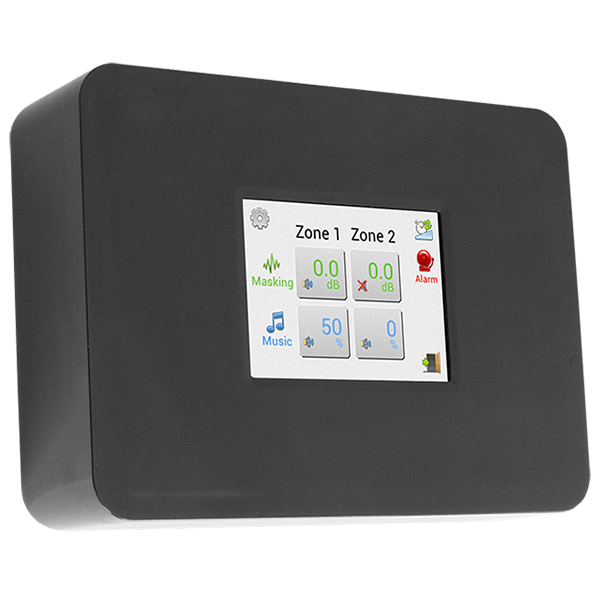
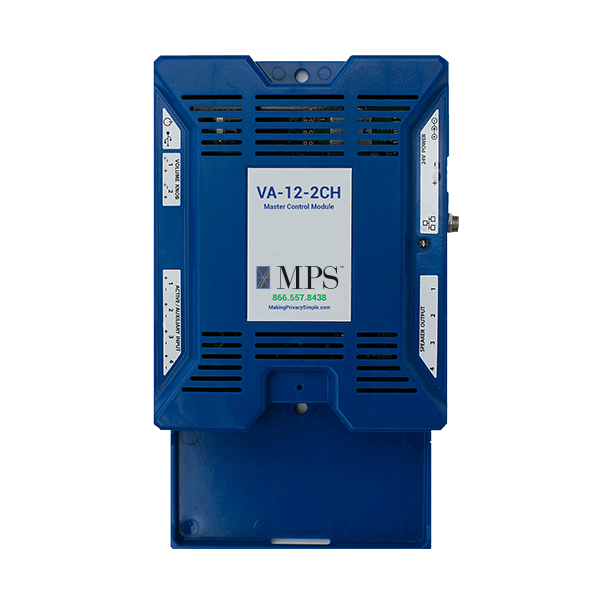
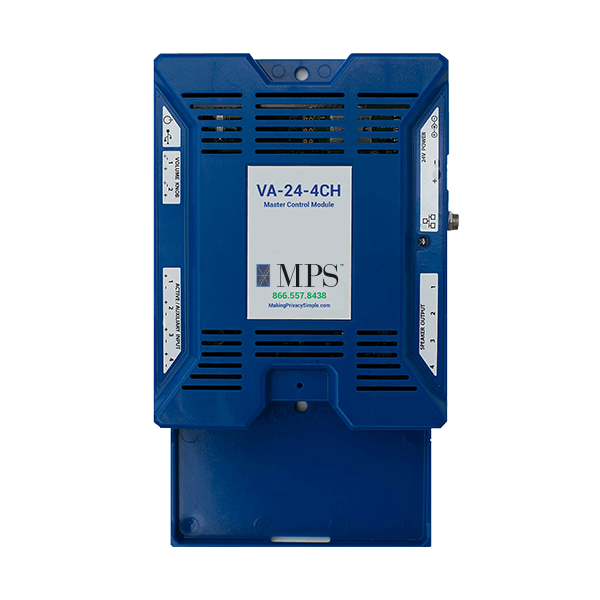
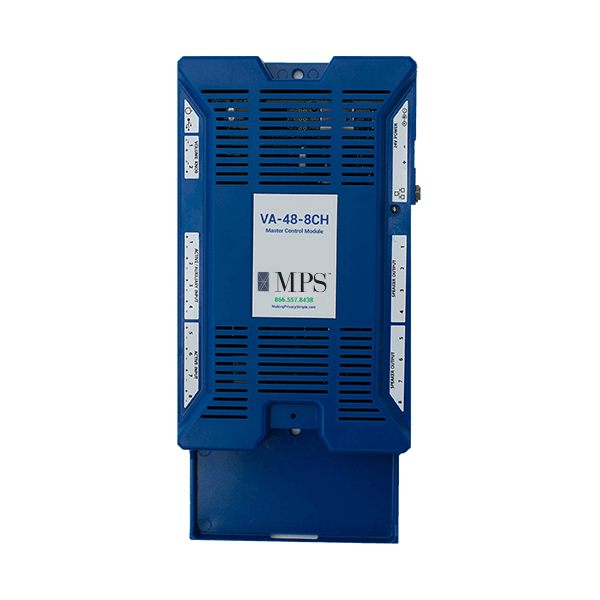
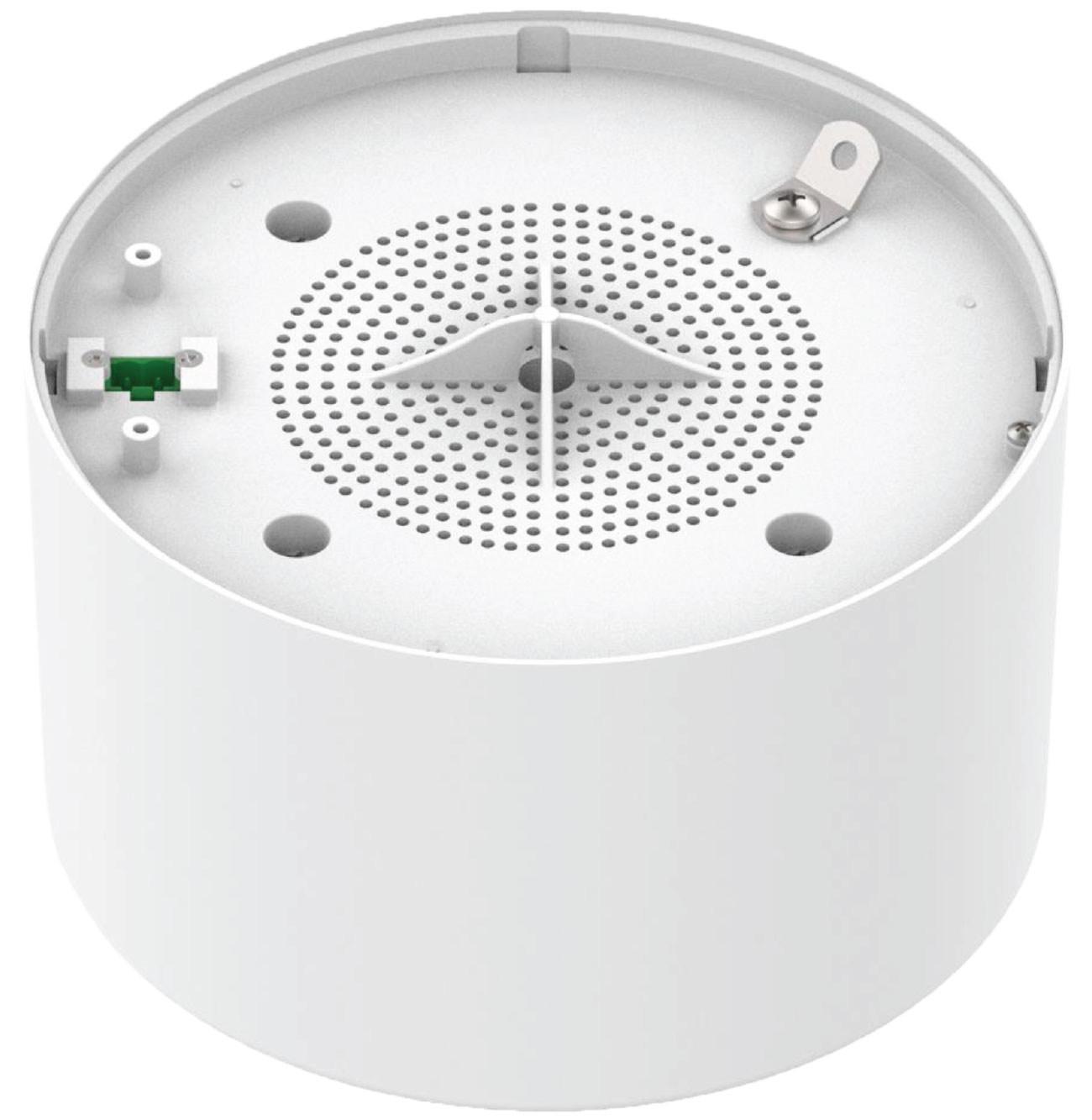
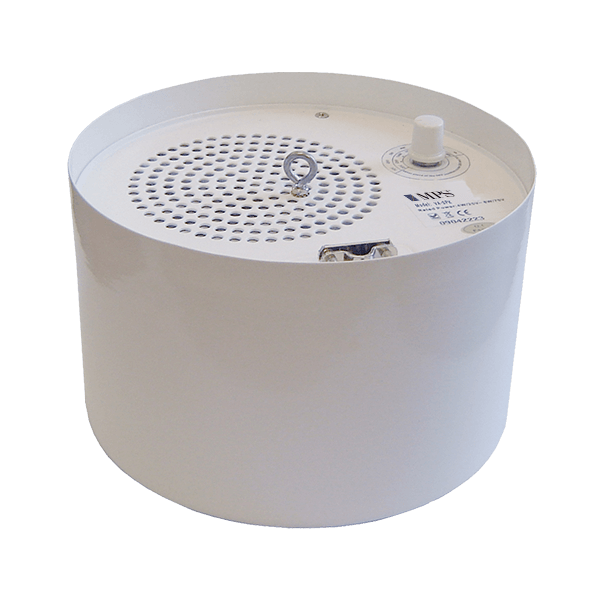
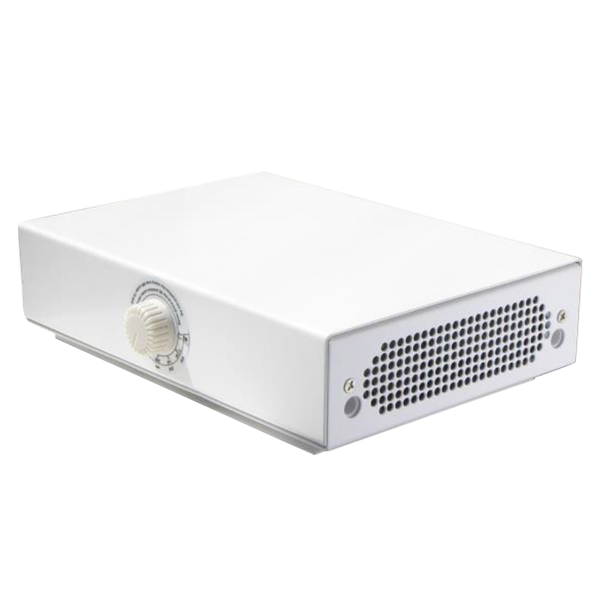
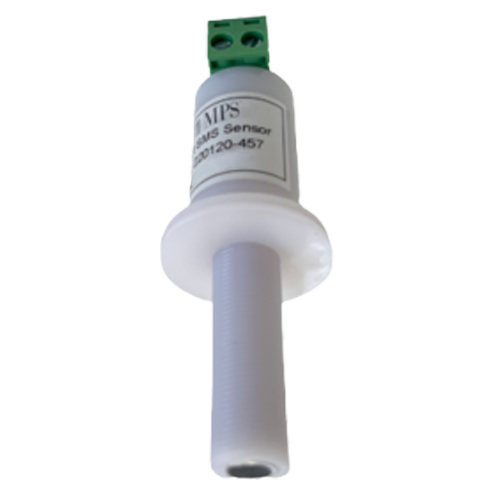
MPS Voice Arrest systems use networked controllers, speakers, and sensors installed above the ceiling or under desks, then tuned to the space. Levels are set and adjusted through the controller, and adaptive sensors can automatically adjust masking based on ambient noise. Zones can be managed independently.
Can different areas have different sound masking levels?
Yes. Sound masking systems are zoned, so different areas - open floor, private offices, reception, healthcare rooms - can run at different levels or schedules. This tailors privacy and comfort to each space from a central controller.
Does a sound masking system require maintenance, and how long do they last?
Sound masking systems require very little maintenance once tuned, with no consumables in normal use. MPS Voice Arrest systems carry a five-year warranty on all parts and components, including speakers and electronics, and the warranty can be extended. Occasional retuning may help after major space changes.
Can sound masking help meet HIPAA privacy goals and support WELL certification?
Yes. By improving speech privacy, sound masking supports HIPAA privacy objectives in healthcare and can contribute to WELL Building acoustic goals related to background sound and speech privacy. MPS can provide product information to help document applicable requirements.
How much does commercial sound masking cost?
Sound masking cost depends on square footage, zoning, ceiling type, and controls. It's typically priced per square foot of coverage, and larger contiguous areas cost less per square foot. Share your space size and MPS will prepare a project-specific quote.
Turnkey & Company Capabilities
Can MPS provide both acoustic panels and sound masking?
Yes. MPS is a single source for both design-oriented acoustic panels and Voice Arrest sound masking, so absorption and speech-privacy solutions are coordinated together. This simplifies specification, purchasing, and installation compared with sourcing from separate vendors.
Can MPS provide turnkey acoustic solutions?
Yes. MPS can support projects end to end - design help, product selection, custom manufacturing, specifications, samples, shipping, and installation support - as a coordinated, turnkey acoustic solution. Ask your rep about installation and turnkey options for your area.
Can MPS support multi-location installations?
Yes. MPS supports multi-location and national account rollouts with consistent products, colors, and finishes across sites, coordinated production, and phased delivery. A project contact keeps every location aligned on spec and schedule.
How early should MPS be involved in a commercial project?
Involve MPS as early as schematic or design development. Early engagement lets MPS help with product selection, specifications, layouts, budgets, and coordination with lighting, HVAC, and sprinklers - avoiding rework and protecting both acoustic performance and design intent.
Can MPS help write specifications and provide AIA resources?
Yes. MPS can provide specification language, CSI-format specs, product data, and design assistance for architects. MPS also offers AIA continuing-education (CEU) presentations - register interest at mpsacoustics.com/ceu-registration. Contact MPS to get specs and documentation tailored to your project.
Can MPS review construction documents and assist with detailing?
Yes. MPS reviews construction documents and reflected ceiling plans and assists with detailing - mounting, penetrations, edges, and coordination - so the acoustic scope installs cleanly. Early review reduces conflicts and RFIs during construction.
How can MPS products simplify specification?
MPS simplifies specification by offering a broad, coordinated product range from one manufacturer, standard customization, ready specs and drawings, and design support. Specifying panels and sound masking together from a single U.S. source reduces coordination, substitution risk, and schedule friction.
Practical Guides (How-To)
How many acoustic panels do I need for an office?
The number depends on room size, ceiling height, hard surfaces, and your acoustic goal rather than a fixed rule. Share your dimensions, finishes, and target with MPS so the team can recommend coverage and quantities.
How do I calculate acoustic panel coverage?
Coverage is calculated from room volume, existing surface finishes, and the reverberation or NRC target, then converting to square feet of absorption (sabins) and panel count. It's not simple square footage. Share your room dimensions and finishes and MPS will run the calculation for you.
What is the best acoustic treatment for an open office?
The best open-office treatment layers overhead absorption (baffles and clouds), hanging dividers to break up sound paths, and Voice Arrest sound masking for speech privacy. Together they cut echo, lower overall noise, and reduce distraction - far more effective than any single product alone.
What ceiling acoustics work best in schools?
Schools benefit most from ceiling clouds and baffles plus wall panels to lower reverberation so students clearly hear teachers. Durable, Class A fire-rated felt handles high traffic. Target comfortable reverberation for speech intelligibility; MPS can size coverage to classroom acoustics goals.
Are acoustic ceiling baffles worth it?
Yes - baffles are among the most cost-effective treatments for open ceilings because both faces absorb sound, delivering high absorption per unit. They're ideal for high or exposed ceilings where wall space is limited, and they double as a design element.
Do acoustic wall panels actually work?
Yes. Acoustic wall panels genuinely reduce echo and reverberation by absorbing sound reflections, making rooms quieter and speech clearer. They won't block sound between rooms, but for echo and in-room noise - the most common complaints - properly sized panels make a clear, measurable difference.
What's the difference between PET felt and fiberglass acoustic panels?
PET felt panels are made from recycled plastic fiber - durable, non-irritant, no coatings, safe to handle and field-cut, and design-forward. Fiberglass panels can offer very high absorption but are typically wrapped, more fragile, and irritating to handle. MPS uses PET felt for its safety, sustainability, and aesthetics.
Can acoustic panels improve Zoom and Teams calls?
Yes. Acoustic panels reduce echo and reverberation that make voices sound distant or muddy on video calls, so microphones capture clearer speech. Treating conference rooms and huddle spaces with wall panels and a ceiling cloud noticeably improves Zoom and Teams call quality.
How do I reduce echo in a large conference room?
Reduce conference-room echo by adding absorption to walls (especially parallel hard surfaces) and the ceiling. Treat first-reflection points and add a ceiling cloud above the table. For large rooms, combine wall panels and clouds; MPS can calculate the coverage needed to control echo.
How do I reduce noise and distractions in an open office?
Reduce open-office noise with overhead absorption (baffles/clouds), dividers between zones, and sound masking for speech privacy. Absorption lowers echo, dividers interrupt sound paths, and masking covers conversations. This layered approach addresses the loudness, echo, and distraction that plague open plans.
Why can I hear every conversation in my office / why do modern offices sound so loud?
Modern offices sound loud because hard, minimalist finishes - glass, drywall, concrete, exposed ceilings - reflect sound, and open layouts remove the walls that once contained conversations. With little absorption, voices carry and echo. Adding absorption and sound masking restores comfort and speech privacy.
What's the best way to improve office acoustics?
The best approach combines absorption to cut echo (wall panels, baffles, clouds), barriers or dividers where privacy is needed, and sound masking to cover speech. Start by identifying whether your problem is echo, distraction, or privacy - usually it's all three - then treat each layer.
How can I improve acoustics without remodeling or retrofit an existing office?
Improve acoustics without remodeling by adding surface-mounted wall panels, suspended baffles or clouds, hanging dividers, and sound masking - all of which install on existing surfaces with minimal disruption, often after occupancy. No demolition needed. MPS specializes in retrofit-friendly solutions for occupied spaces.
Do acoustic panels and sound masking work together, and is sound masking worth it?
Yes. Panels absorb echo and masking covers speech, so together they deliver both a quieter room and real speech privacy - each makes the other work better. Sound masking is worth it wherever distraction and privacy matter, especially open offices and healthcare. MPS provides both.
How much do commercial acoustic panels cost?
Commercial acoustic panel cost varies with product, thickness, customization, and quantity, and is usually quoted per panel or per square foot. Custom shapes, colors, and finishes affect price. Share your scope and MPS will prepare a project-specific quote.
Can acoustic panels be painted?
MPS felt panels generally should not be painted, because paint clogs the porous surface that absorbs sound and reduces acoustic performance. Instead, MPS offers over 100 integral colors, woodgrains, and custom SHADES colors - so you get a felt-perfect hue without sacrificing absorption.
Can acoustic panels be removed, reused, and are they fire rated and sustainable?
Yes on all counts. Many MPS panels are demountable and reusable, making them ideal for churn and relocation. They're ASTM E84 Class A fire-rated and made from 60% recycled PET felt, non-toxic and sustainable - combining safety, sustainability, and flexibility.
How long do acoustic panels last?
MPS felt panels last many years in normal commercial use because performance comes from the durable material itself, not sprays or coatings that degrade over time. They remain color-stable and effective for the long term, and MPS warrants its acoustic material, hardware, and mounting equipment for two years against defects.
Can acoustic panels be custom printed?
Yes. MPS can print custom graphics, patterns, and logos on acoustic felt, and the SHADES system protects print quality and design intent - so panels can carry branding or artwork while still absorbing sound. Request a sample to approve print and color.
How do I specify acoustic panels in Revit?
Specify MPS panels in Revit using the Revit/BIM objects and CAD details available from the MPS Resources/Downloads section, then add MPS specification language (CSI format) to your project manual. CAD and Revit availability varies by product but is standard for most lines. Your MPS rep can supply the assets you need.
How do I improve speech privacy in an open office or for patients?
Improve speech privacy by combining absorption (panels, baffles) to reduce reflections with Voice Arrest sound masking to cover the intelligibility of nearby conversations, plus dividers where helpful. In healthcare, this protects patient conversations and supports HIPAA goals. MPS can design the right mix for your space.

